


CDEC Foundation ( The Fondazione Centro di Documentazione Ebreaica Contemporanea CDEC Onlus) is research and documentation of all forms of anti-semitic persecution in Italy, and the Jews’ contribution to the Resistance in Italy, including an independent research institute for the promotion and study of the events, culture and reality.
The CDEC digital library project was undertaken by the CDEC Foundation in collaboration with Ministry for Cultural Heritage and Activities. This project is aiming to enhance the history and memory of Jews in Italy, particularly during the Holocaust. The project specifically focuses on the Shoah in Italy, with the initial publication of resources in Linked Open Data format, including a dataset called the Names of the Victims of the Shoah in Italy. While the specific location where the project was undertaken is not mentioned, it is likely to have been primarily conducted in Italy, given the focus on the history and culture of Jews in Italy. The project was developed over several years and began around the end of 2012, with its main focus on the enhancement and use of the CDEC Foundation. They did this project through a combination of technological expertise, collaboration with partners, and a systematic approach to data management and publication.

Who founded the CDEC Foundation?
- Since 1986. the Center operates as a not-for-profit Foundation, under the name La Fondazione Centro di Documentazione Ebracia Contemporanea — CDEC. Michele Sarfatti has served as the Foundations direction.

Ten boys with caps on their heads posing around their teacher in a backyard with plants (Picture)
STories
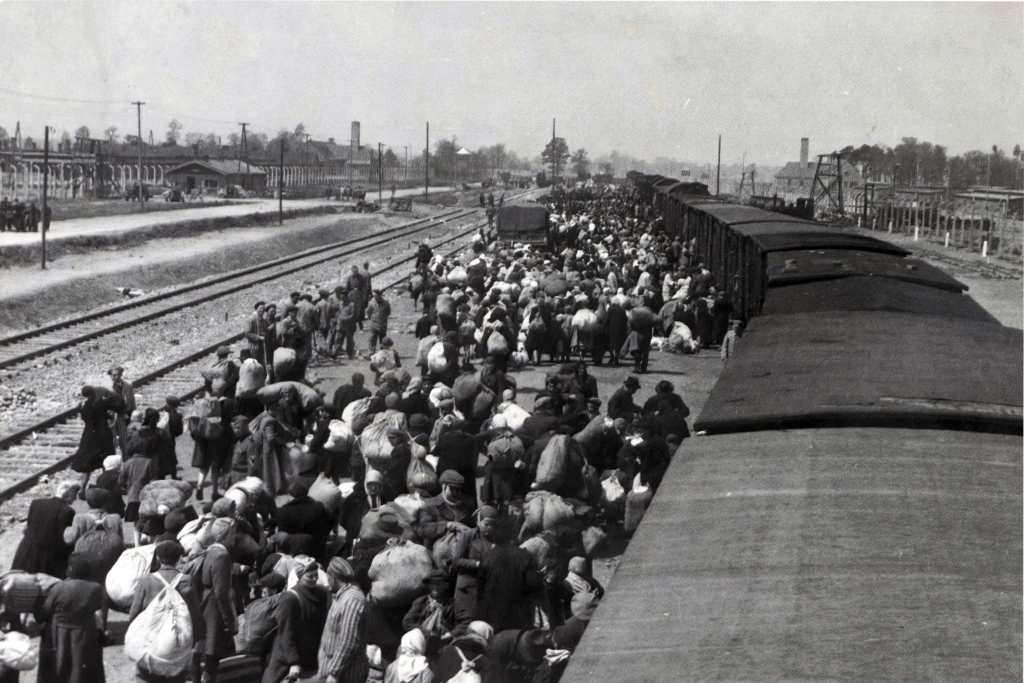
On December 13, 1943, she was arrested with her companions and taken first to the Aosta prison and then to the Fossoli camp. From there, in February 1944, she was deported to Auschwitz where she managed to save herself because she was a doctor.

Story through Digital Project
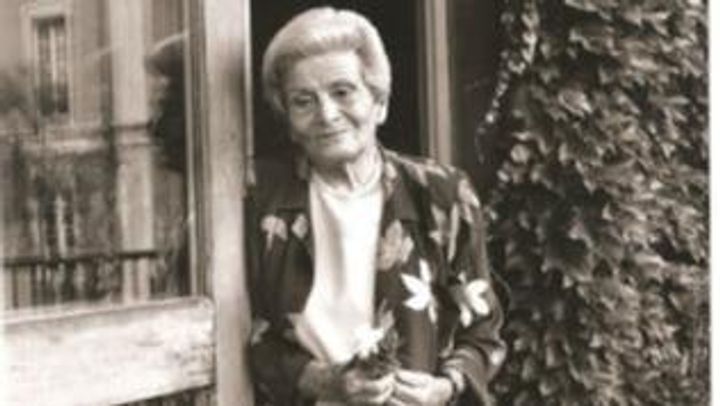
Lello Perugia
Lello Perugia was born in Rome on 31 October 1919, son of Israel and Emmma Dell’Ariccia. After 8 September 1943 he fled from Rome to take refuge with his family in Borgo Colle Fergato, in Abruzzo; here he took part in the liberation struggle by serving in the Liberty Band, operating in the Carsoli area and surrounding areas. Arrested in Carsoli by the Germans on 14 April 1944, he was first detained in Borgorose and then in Rome; from the capital he was deported to Fossoli and Auschwitz. He was freed on 27 January 1945.
Named after Elisa Springer, who in 1938 was driven from her apartment at Strozzigasse 32-34, survived several concentration camps, and then served as a contemporary witness (of the Holocaust) and took care of the memory of her grandfather, the waltz composer Elkan Bauer, who was murdered in Theresienstadt.
Story through Digital Project
Elisa Springer