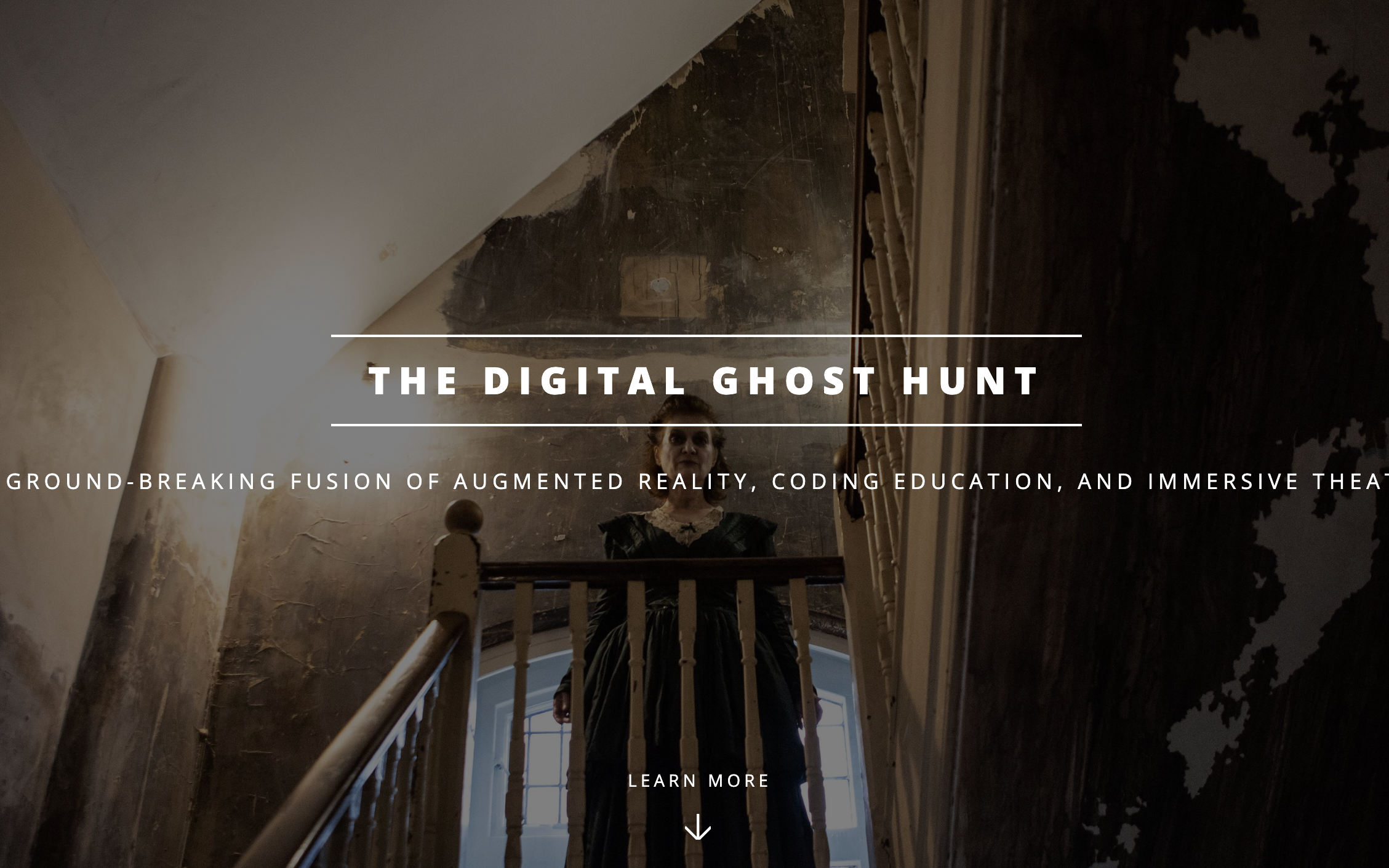
The project we have chosen to review and analyze is the Digital Ghost Hunt. The Digital Ghost Hunt, a fusion of coding education, augmented reality, and live theatre, was a 2017-2019 collaboration between the University of Sussex, King’s Digital Lab, and KIT Theatre, in which children learned to code and enjoy it by making their own “ghost-detecting” devices which interacted with the real-world environment, as they followed a story presented to them by performers.
The Project Team consists of Co-Creator Elliott Hall, Director Tom Bowtell, Mary Krell, and Carina Westling. The project was funded by the Arts and Humanities Research Centre as part of the Immersive Experience funding stream. The aim of this project was to explore how an immersive experience can deepen social and historical engagement with the physical world, and in doing so stand in contrast to the ‘black box’ design paradigm that remains prevalent in information technology. The stated goals and objectives for the project included not only the design of a replicable live immersive augmented reality experience for young audiences, but also the production and publication of scripts and open-source code libraries for other producers to use and adapt for other heritage venues and audience cohorts.

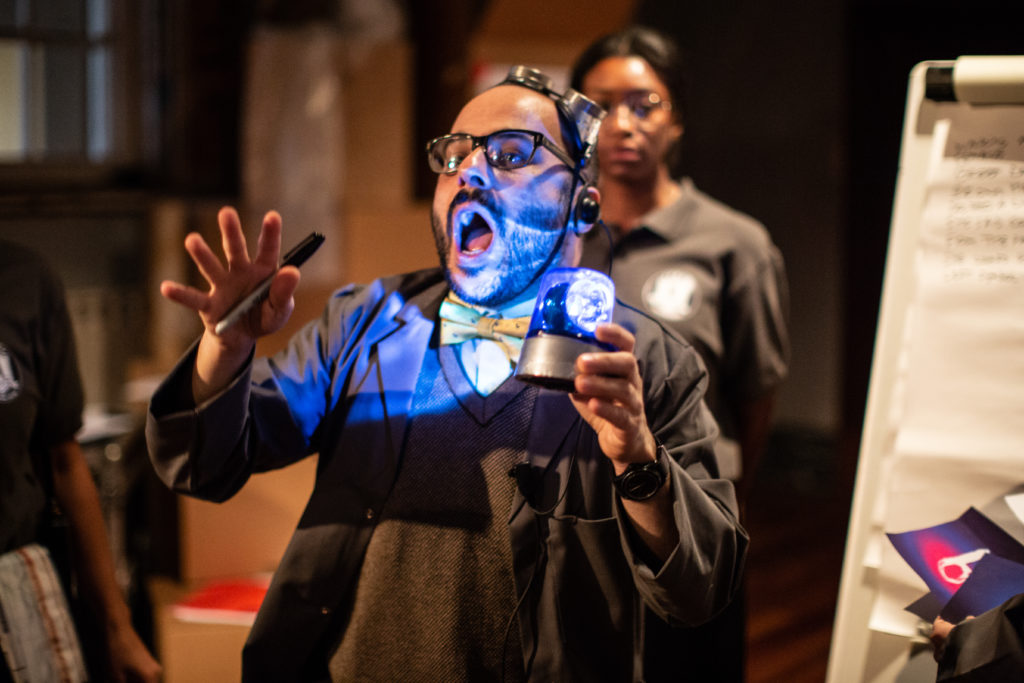
This project was created as a way to develop computational thinking skills for children through ghost-hunting challenges. The Digital Ghost Hunt tasks young ghost hunters with tracking down the ghosts and setting up their own paranormal detectors. Their devices, made from two microcomputers, a Raspberry Pi and Micro:bit allow them to identify objects touched by ghosts.
