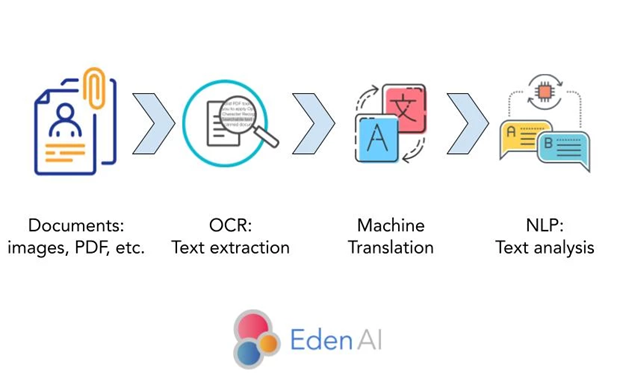
The Eviction Lab project employed a comprehensive, multi-phase approach to collect, clean, validate, and analyze eviction records from across the United States. The data pipeline included legal document collection, OCR and NLP processing, classification, standardization, quality control, and aggregation. A mix of automated and manual methods ensured accuracy and completeness.
Data Collection: Court records from 50 states were gathered through public sources, FOIA requests, state-level bulk data exports, and scraping where allowed. These included a wide variety of legal formats and structures.

Data Processing & Cleaning:
- Records were parsed using OCR for image-based documents.
- Natural Language Processing (NLP) classified case types.
- Duplicates and non-eviction cases were filtered.
Standardization & Quality Control:
- Plaintiff/defendant names and addresses were standardized.
- Cases were geocoded and matched with census geographies.
- Errors were flagged using automated scripts and manually reviewed.
Aggregation & Analysis:
- Cleaned cases were aggregated by time, geography, and filing type.
- Data were visualized and published on the Eviction Lab website for public access.
Step 1: Classification of Eviction Cases (NLP & Heuristic Rules)
The team used a mix of regular expressions and machine learning classifiers to identify eviction cases within the broader dataset of court filings. The classification models were trained on labeled data from selected counties and refined using iterative error analysis. This step was critical because many courts did not explicitly label cases as evictions, so intelligent inference was needed to extract accurate subsets of data.
Step 2: Address Standardization and Geocoding
Plaintiff and defendant addresses were normalized using USPS APIs and geocoded with commercial and open-source tools. This allowed cases to be mapped to census tracts and neighborhoods. Address matching also helped identify serial eviction filers. Errors due to misspellings, missing ZIP codes, or P.O. boxes required robust handling logic.
Step 3: Quality Assurance and Manual Review
Automated scripts flagged outliers (e.g., extremely high eviction counts in small counties) and suspicious patterns (e.g., repeated names). A team of reviewers manually checked flagged cases and sampled records from each state for accuracy. This hybrid approach improved the dataset’s reliability, ensuring it met academic and journalistic standards.

Connection to Digital Humanities
The Eviction Lab project puts best practices into action by being thoughtful, transparent, and methodological. They built a detailed process to clean, classify, and double-check data, combining smart tech like OCR and NLP with hands-on review to catch errors and make sure the data was accurate. They also made an effort to document everything clearly and standardize tricky details like addresses, which helps other researchers understand and trust their work. Additionally, by making the final data and visualizations public, they’re showing how digital projects can serve both academic research and the wider community. It’s a great example of how digital humanities can be thorough and socially impactful at the same time.