Overview
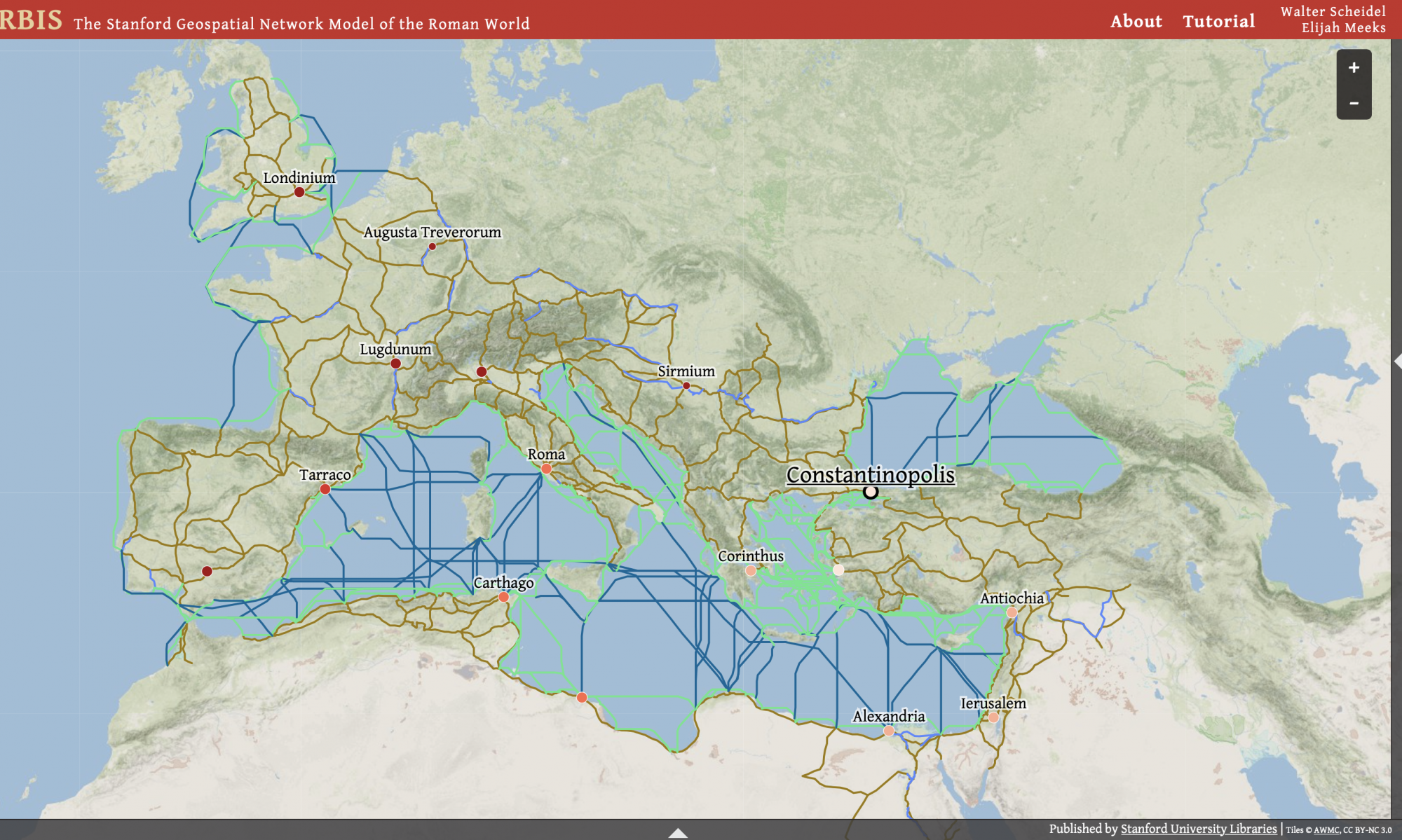
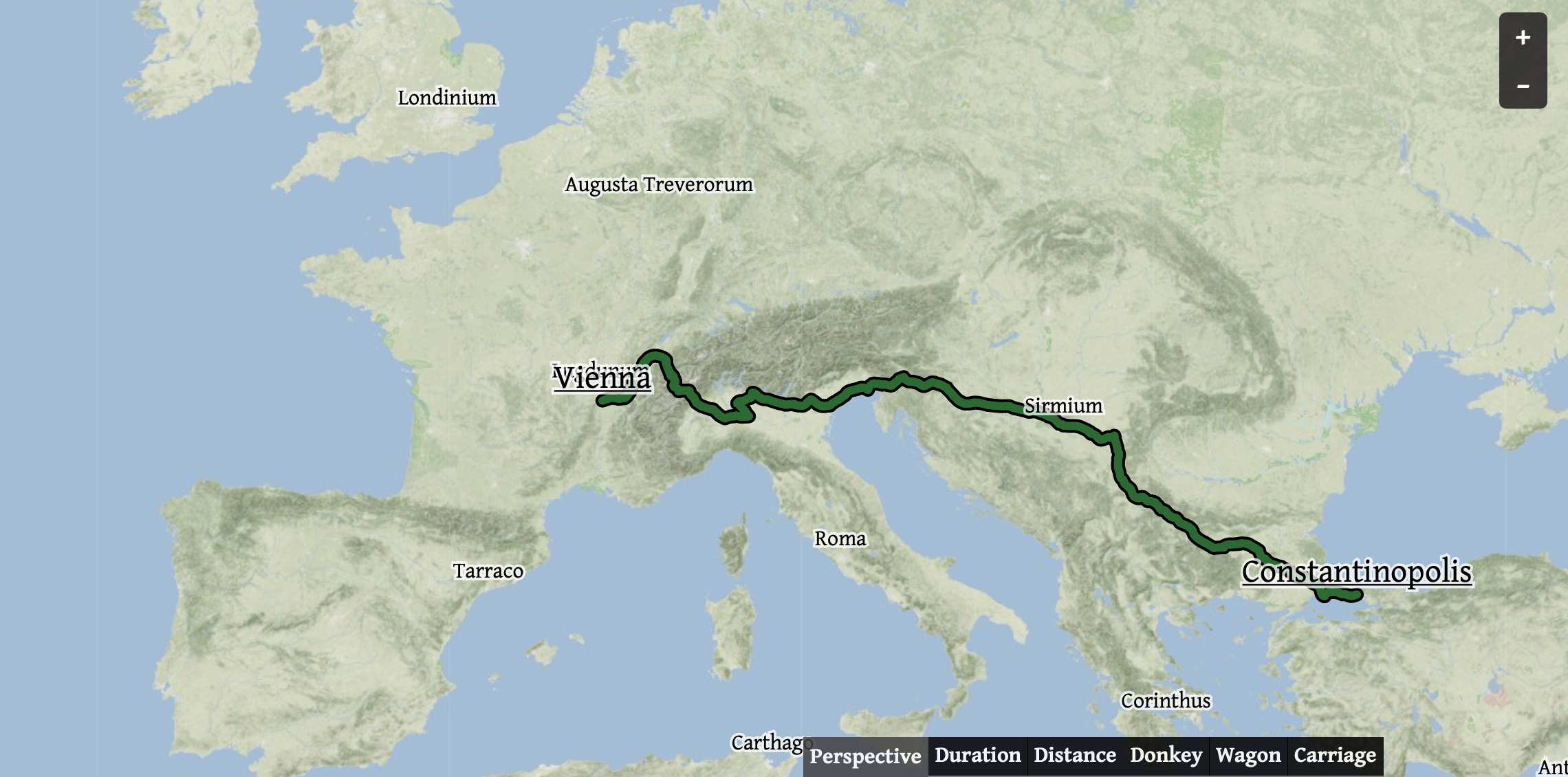
Orbis the Network of the Roman World is a geographic project that is able to allow a user to interact and see the real trading routes and transportation routes that was used during the Roman Empire. This project has features from selecting the starting to location to the final destination while altering the factors during the travel. The user is able select the mode of transportation, transfer cost from switching between land to water, and the season of the year. This project designer Walter Scheidel a roman historian at Stanford University had a vision for this project which was quite simple, this project seeks to improve our understanding of how a large scale system in this case the Roman Empire worked when it had its highest peak of controlled land. This goal is accomplished through the work the website does with the software of D3.js that allows for the extensive mapping and information visualization. One of the biggest things used in this website is the GIS( Geographic Information System) which was created by a fellow member of Stanford University Elijah Meek who created the system the website works with.
Significance
This system is very impressive with how it uses its tools to physically show the space between to points but not only that but give an incredible amount of information based on that trip that has been set. The idea that we are able to see something that took place hundreds of years ago is amazing because we clearly can not travel to that time and see for ourselves but this project allows for the next possible thing. With this technology we were given the next best thing which is allowing whomever to explore the Roman Empire from anywhere with an internet connection. To many other people this is significant because of the economic factors that can been seen in this project. This is an amazing project that does its job incredibly well because it doing so much more in such a simple format and way to be able to give the user a good experience. Take for example the amount of significance this would have in a classroom setting at any university, this could completely change the way students learn about large systems and how they work with the example of the Roman Empire this project is based upon. For many people this project is significant because of how fasinating the project is able to bring in so many tools from economic expenses to real world time that this would have been taking place in as well. This are truly some of the reasons why this project has created a real name for itself and still stands and strives to be a great digital humanities project.
