The Cities and Memory project is a strong example of Digital Humanities in practice, as it effectively combines technology, creativity, and cultural documentation. One of its greatest strengths is its accessibility and collaborative nature, allowing contributors from around the world to participate and share their own environments through sound. This supports inclusivity and expands whose voices are represented in digital archives.
The project also demonstrates strong documentation practices through its use of structured metadata, clear submission guidelines, and standardized formats such as WAV files. This ensures consistency, high-quality data, and long-term usability, which are key principles of Digital Humanities.
Additionally, the project successfully uses digital tools to create an interactive experience through its sound map and archive. This allows users to engage with cultural data in a more immersive and meaningful way compared to traditional forms of media.
However, the project does have some limitations. Global representation is uneven, as some regions have significantly more contributions than others, which may lead to gaps in cultural coverage.
While the project is open and accessible, participation is still influenced by access to technology and awareness of the platform.
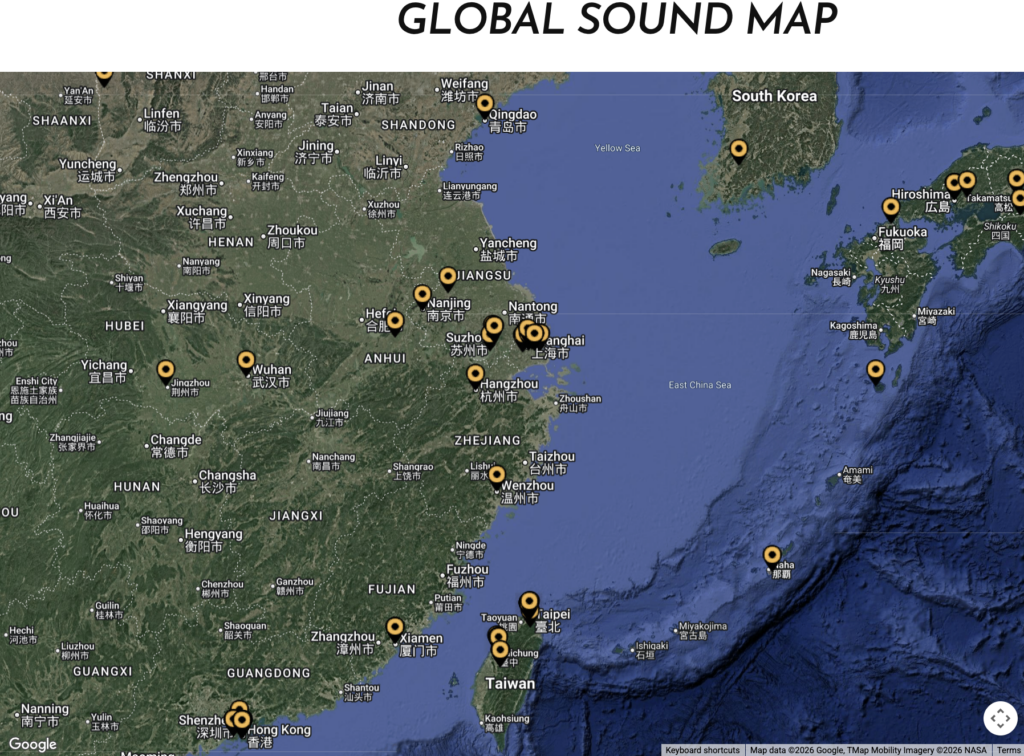
Asia shows uneven representation within the project, with some areas having many recordings while others have little to no presence.
Overview:
Cities and Memory meets many Digital Humanities best practices, particularly in accessibility, collaboration, and data transparency. While there is room for improvement in achieving more balanced global representation, the project remains a strong and innovative example of how Digital Humanities can preserve and reinterpret culture through digital media.