The J. Walter Thompson Company Archive documents the history, operation, policies and accomplishments of one of the world’s largest and oldest advertising firms. The papers here reveal many aspects of twentieth-century cultural, social, business, marketing, consumer and economic history while investigating the human psyche. Documents in this resource date from 1887 to 2014, with the bulk of the material dating from 1900 to 2000.
“Home – J. Walter Thompson: Advertising America.”J. Walter Thompson Company Archive, Adam Matthew Digital, www.jwtadvertisingamerica.amdigital.co.uk/. Accessed 24 Feb. 2026.
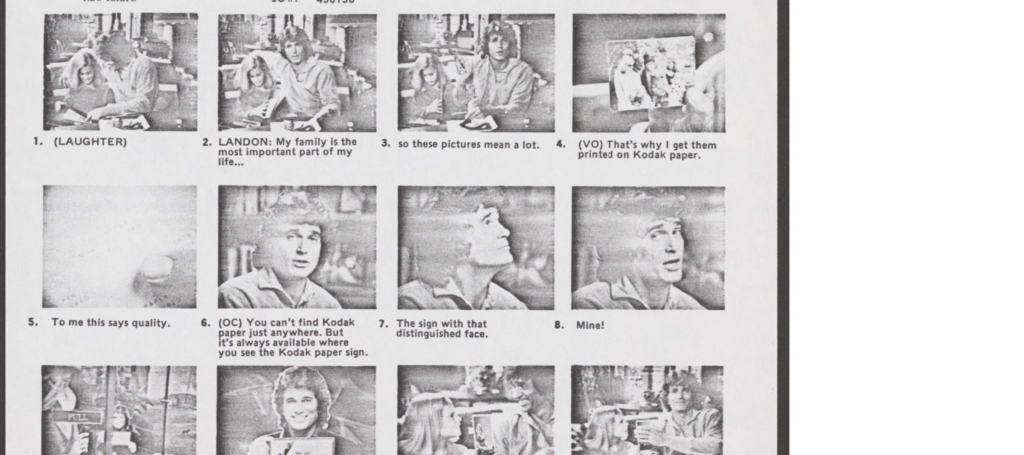
James Walter Thompson began working with Kodak in 1930 and continued until 1997, where they collaborated in New York City. This project explores J. Walter Thompson’s business review of Kodak and its new camera design, as well as a Christmas-themed commercial.
The website includes information on the nature and scope of J. Walter Thompson, their collections, essays and video interviews, visual galleries, client case studies, and the women of J. Walter thompson. For this project, I focused on their Kodak files, which I discovered in their Client Case Studies and Kodak section. This is a short page discussing the founding of Kodak, how they began to develop their digital camera, their ultimate decline, the advertising J. Walter Thompson contributed to Kodak through capturing memories, and the various documents used to accomplish this. I chose their Naming Committee Review and the New Christmas Spot Guidelines via their embedded link in “Sensalite camera, 1980.” In addition, they have links to other commercials, such as “Daddy’s Little Girl,” 1989, more examples of commercials and document products, and even how they named Kodak’s P-175 product. There are also account files that provide marketing information, including from as early as 1956, board meetings, and reports on how Kodak thought about its market.
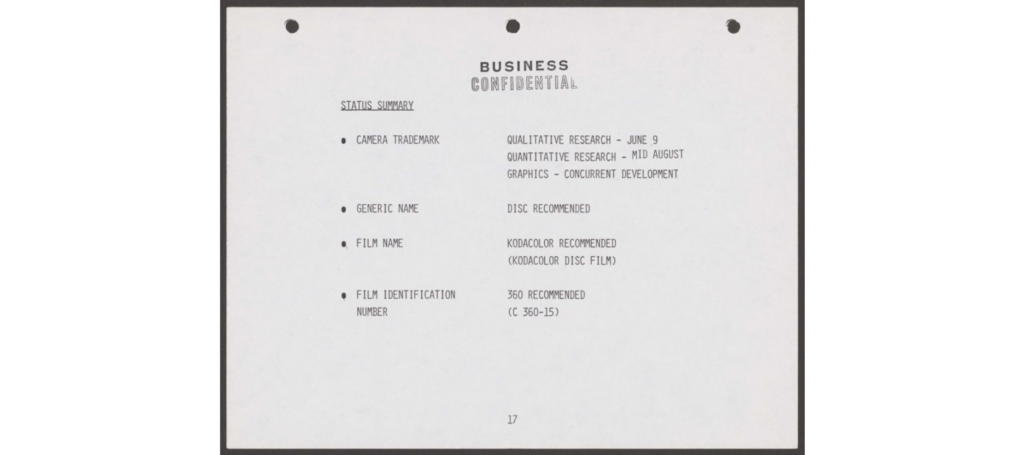
Naming committee recommends “disc”
- modern tech implications
- unique
- descriptive
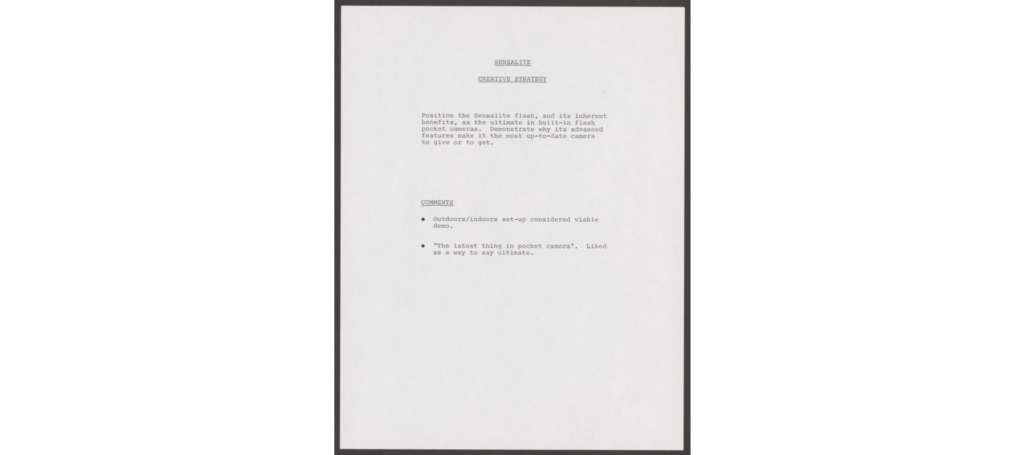
Creative strategy was to display benefits and “ultimate built-in flash camera”
Execution aimed to create:
- sentimentality
- emotionalism
- stay true to “fatherly image”