DHM280 · Project 2
Digital Humanities isn’t defined only by its tools. It is also defined by what it values. This page looks at the two values this archive puts into practice most clearly.
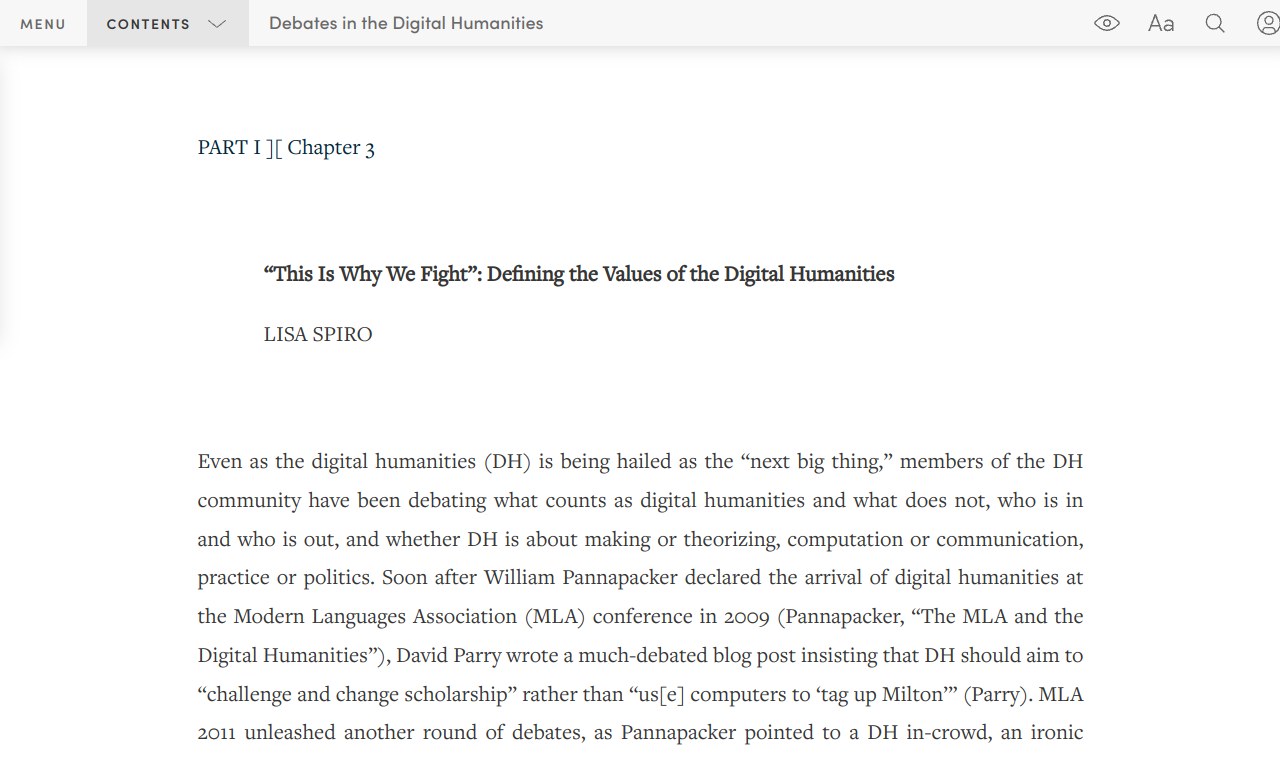
Link to DH
In “This Is Why We Fight: Defining the Values of the Digital Humanities” (Debates in the Digital Humanities, 2012), Lisa Spiro argues that DH holds together because of shared values: openness, collaboration, collegiality, diversity, and experimentation. She describes openness as freely sharing ideas, content, and software, and being transparent about how digital scholarship gets done.
Value 1: Transparency
Transparency means showing your work, so others can understand it, check it, and repeat it. The archive does a lot of this. The Downloads page explains where the data comes from, why only IDs are shared, the exact vaccine keyword rule, and how to rebuild tweets. The dashboard comes with instructions for reading its charts.
It falls short in two places. The collection script isn’t published, and the definition of a “COVID-19 tweet” belonged to Twitter, not the lab. You can see what the lab did with the data, but not exactly how it arrived.
Value 2: Openness
Openness means anyone can build on the work, not just people with money and connections. This is where the archive really shines. The datasets are free to download for non-commercial research, each one has a permanent DOI, the toolkit is free under an open license, and the dashboard needs no login.
But openness depends on the platform. In 2023, Twitter ended free academic access, and researchers have cited enterprise access at around $42,000 a month. The IDs are still open, but for most people they are now very hard to turn back into tweets.