DHM280 · Project 2
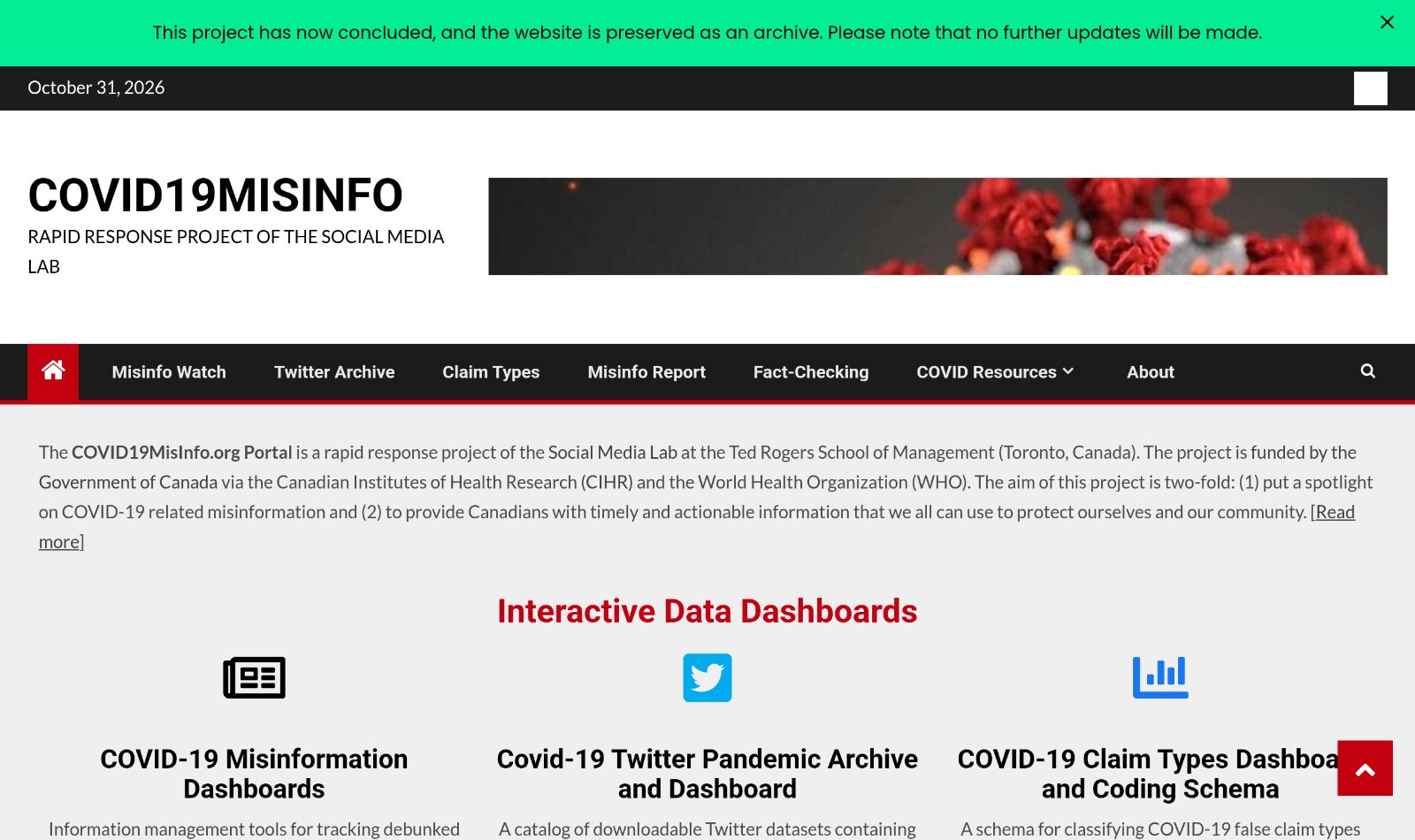
For Project 2, I picked the COVID-19 Twitter Pandemic Archive: billions of tweet IDs collected during the pandemic by the Social Media Lab in Toronto. I come at it as a Communication Studies student, with one question running through every page. Is this a project where Communication Studies and Digital Humanities genuinely make each other better?
What Project 2 asks
The assignment is to take a real Digital Humanities project and hold it up against the field’s best practices. Is it documented? Is it open? Could someone else follow what was done and do it again? From there, I have to decide whether my own discipline has solid ground for working with DH, or whether the fit is weaker than it looks.
Why this project
Misinformation is a communication problem at its core: who says what, to whom, and why people believe it. During COVID-19 that problem had real consequences for people’s health. An archive that captured the conversation as it was happening seemed like the best place to test how well the two fields fit together.
How this site is organized
- Project: who made it, when, and why it matters
- Impact: what it means for culture and social justice
- Goals: what it set out to do, and for whom
- Data: what goes in and what comes out
- Tools: the software behind it
- Methods: how a tweet becomes a dataset
- Research Values: transparency and openness
- Research Articles: published research from and about the project
- Results: what the project delivered to its audiences
- Evaluation: the final verdict, including whether the two fields should work together
- Works Cited: sources