DHM280 · Project 2
The final verdict: how well the COVID-19 Twitter Pandemic Archive holds up against Digital Humanities best practices.
Scorecard
Documentation
Clear guides to the data, the files, the vaccine filter, and the dashboard. The missing piece is the collection script.
Strong
Openness
Free data with permanent DOIs, a free toolkit under an open license, and a public dashboard. Held back by Twitter’s paywall.
Strong, with limits
Transparency of method
The lab’s own choices are spelled out exactly, but the core collection rules belonged to Twitter and are now gone.
Mixed
Ethics and privacy
Sharing only IDs follows the platform’s rules and means deleted tweets stay deleted.
Strong
Sustainability
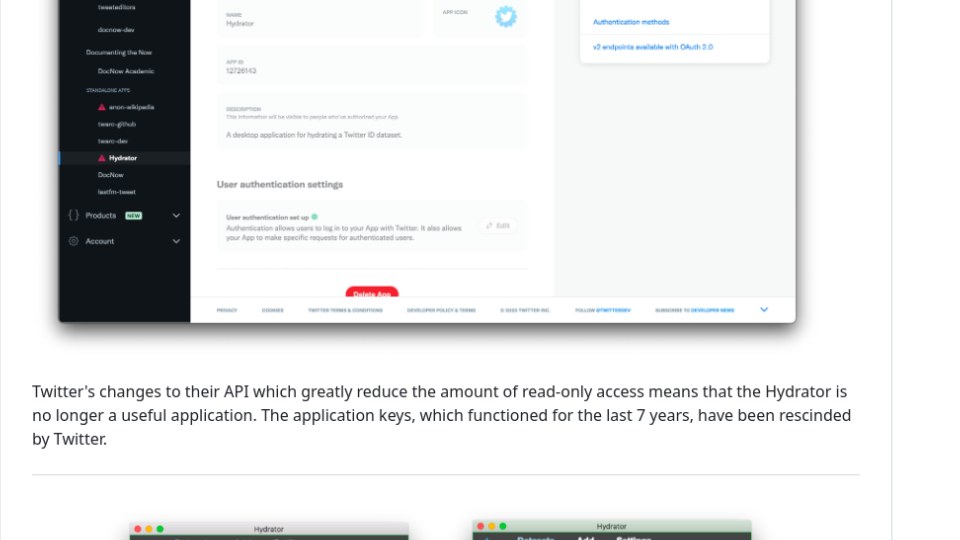
The project has ended. The IDs will survive on figshare, but Hydrator, the recommended rehydration tool, no longer works.
Weak
Biggest strength
It was built for other people. The lab didn’t just publish its own findings. It handed everyone the raw material and a tool to work with it, and then used that kind of data to publish real research (see Research Articles). That is exactly the shared infrastructure DH values.
Biggest weakness
Everything rests on a platform the lab doesn’t control. When Twitter changed its API rules in 2023, research using Twitter data dropped, and this archive became far harder to use. A stronger plan would have been to partner with an institution, such as a university library, that could legally hold the full tweets for researchers.
Overall
A strong archive on a fragile foundation
The COVID-19 Twitter Pandemic Archive gets most DH best practices right. It is open, well documented for users, careful about privacy, and it led to published research on how misinformation spreads. Its weaknesses are an unpublished collection script and its total dependence on Twitter.
It is a model for how Communication Studies and DH can work together, and a reminder that any archive of born-digital culture needs a plan for the day the platform changes.
Conclusion: grounds for collaboration
The bigger question for this project is whether Communication Studies and Digital Humanities have real grounds to work together. Based on this archive, my answer is yes.
Shared goals
Communication Studies wants to understand how misinformation spreads. DH wants to preserve and study public culture. One archive serves both.
Shared values
Both depend on transparency and openness. A claim about how false information spreads only convinces people if they can check the data behind it.
Shared tools
APIs, sampling large datasets, network analysis, and dashboards are everyday methods in both fields, and the Toolkit and Hydrator show the two communities already building on each other’s work.
Verdict: grounds established
Communication Studies brings the questions about how messages spread and why people believe them. DH brings the practices that keep the evidence open, documented, and preserved. The archive’s biggest weakness, its dependence on Twitter, is exactly the kind of preservation problem DH is good at solving, which makes the case for collaboration stronger, not weaker.