In conclusion, Museum Studies and Digital Humanities are very compatible.
The tools like Oculus could definitely be shared between the two disciplines. The way that VR and Oculus is used in the Secret Annex allows for people to explore the annex in a way they can’t in the actual museum. Similarly, the tool of VR and Oculus headsets could be used in multiple different ways in Digital Humanities for sharing cultural data and showing off different aspects of culture.
The goals definitely align when it comes to sharing and providing access to cultural data. The availability and accessibility of the Secret Annex allows for everyone to see what the annex looked like when Anne Frank was hiding there with her family. This reflects the larger mission and goals that museums have of providing access to the public. This goal of publishing, providing access to, and sharing cultural data is also exactly what one of the goals of Digital Humanities is.
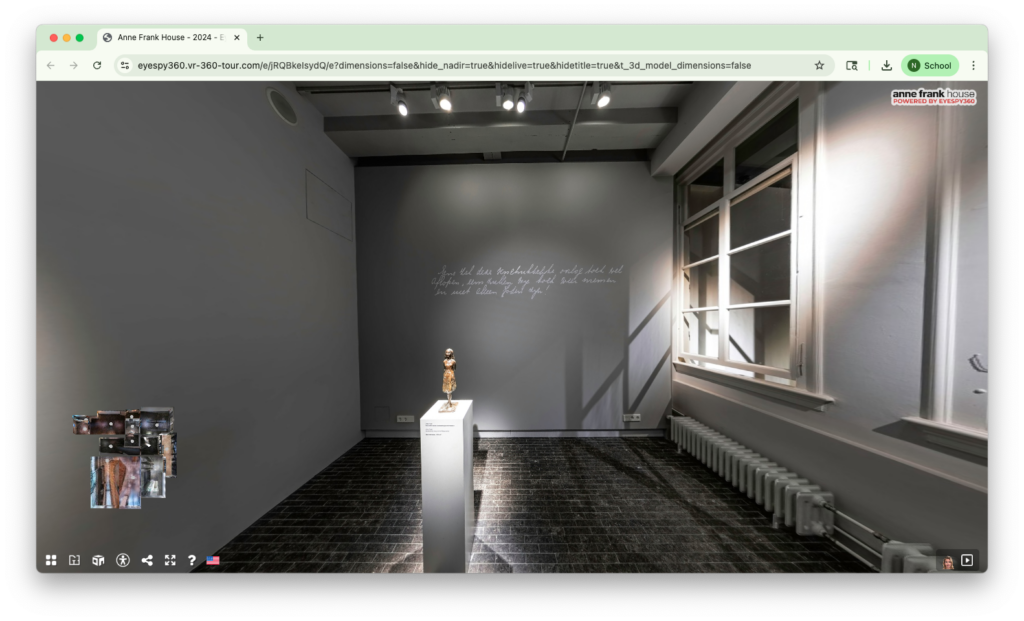
Both Digital Humanities and Museum Studies definitely share values of collaboration. Digital Humanities emphasizes this collaboration between people that has to be acknowledged to make sure that different perspectives are heard. Similarly in Museum Studies, collaboration is encouraged and important for the work in museums to be better. The Secret Annex displays this collaboration through the different collaborations that happened throughout its creation.