OVERVIEW
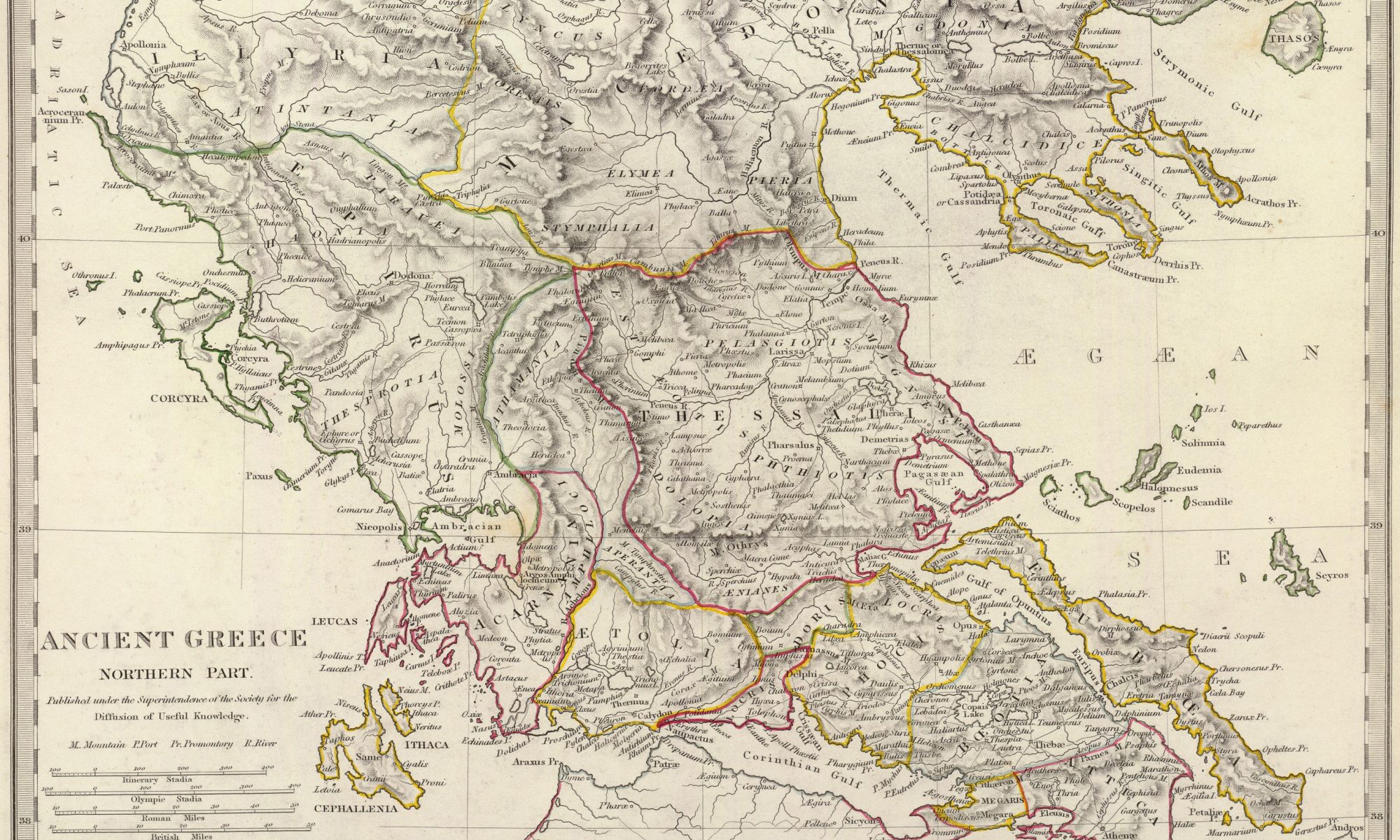
Pleiades is a crowdsourced geographical index and graph of ancient places, names, and locations, that heavily depends on scholarly volunteers to add to their research. Pleiades allows scholars and students across the world to share historical and geographic information about the ancient world in a digital form. Pleiades has considerable coverage for the Greek and Roman world, and is expanding into Ancient Near Eastern, Byzantine, Celtic, and Early Medieval geography. Pleiades allows users to learn about ancient places that today would not be includes on the map. It shows these places and locations in a contemporary map, with original names.
In Pleiades places are visionary estimations of locations that represent ancient places that are no longer in existence. “They are objects of though, speech, or writing, not tangible, mappable points on Earth’s surface.” Meaning they are moments of history that have long passed but are digitally preserved, and growing with information on this website. Although these places often are closely related to a tangible place on earth, they are constructed by human experience. For example, a modern city known to be located atop an ancient settlement is a place. These places are not necessarily permeant they may expand or change overtime depending on information that is collaboratively discovered.
Location connect places to their geographical area on earth surface using longitude and latitude during a specific date. Location and Place are often linked, but sometimes due to a lack of information scholars are unable to locate a specific pin point for a Place. Names of places represents the identity of the place in human culture. “As with locations, a single place can have multiple names, but an individual namecan be associated with one and only one place.”
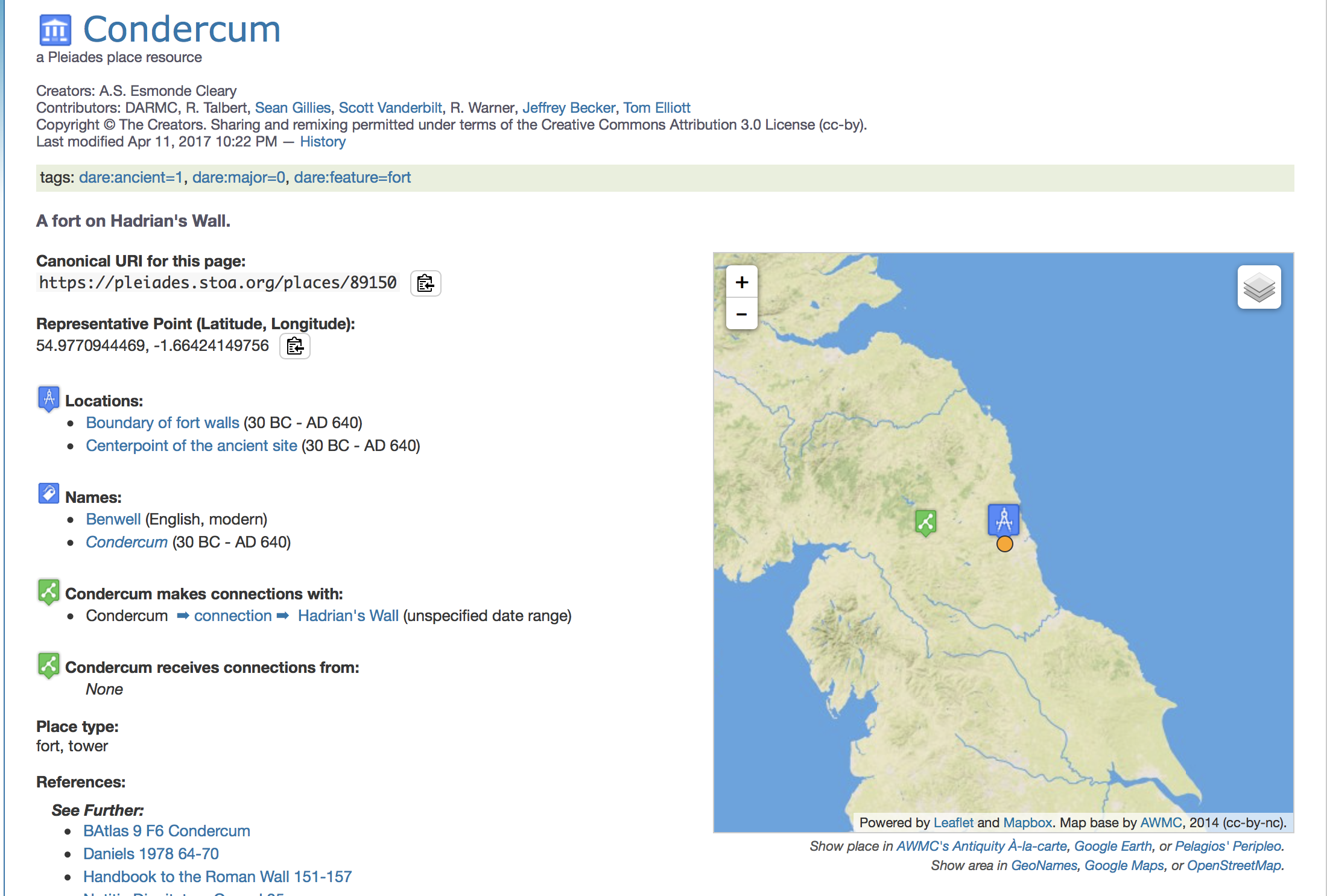
The Roman fort of Condercum, Pleiades has assigned the permeant identification number of 89150 that corresponds this place page. This page links to other pages associated with location.
SIGNIFICANCE
Pleiades is a vital resource that preserves ancient history in a digital and ever-growing way. Although these places are not on today’s map, they are still important for learning about human culture and civilization.
Pleiades is a database built by people for people, using the method of crowdsourcing. Crowdsourcing allows the database to farm out work to people all over the world to get as much information as possible, to make the site as accurate and dynamic as possible. It publishes not just for individual human users, but also search engines. This allows Pleiades research to be recycled and shared among the digital world.
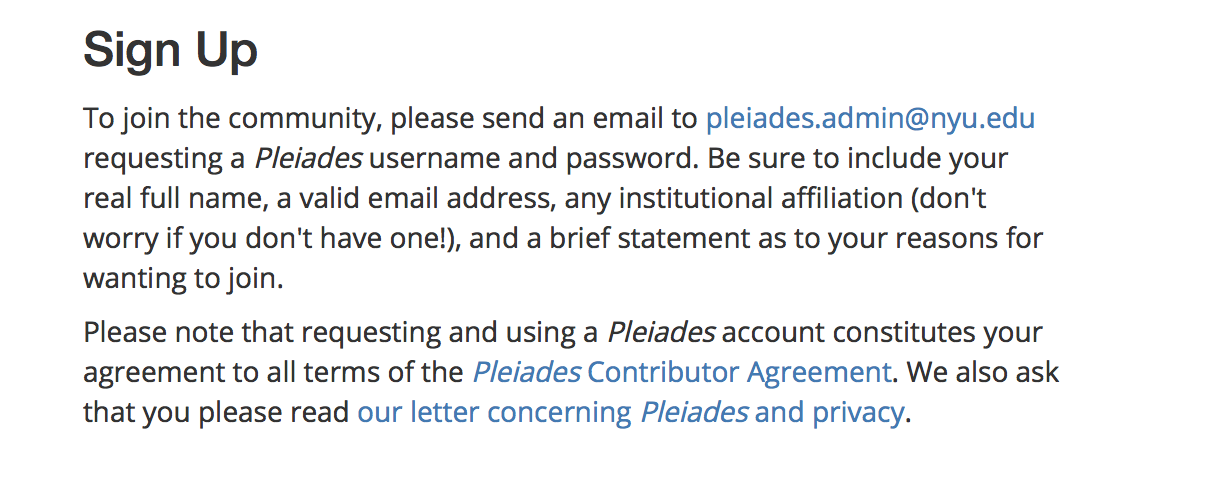
Pleiades is free and open to the public, and offers is the opportunity for people around the world to get involved with this research. Joining the Pleiades community is simple and easy, and you can help contribute in multiple ways like: bettering coordinates for sites, identifying placements, writing essays about ancient history, or adding links to websites, books, and articles.
CONTRIBUTORS
Pleiades is a joint project between the Ancient World Mapping Center, the Stoa Consortium, and the Institute for the Study of the Ancient World. Funding for this on-going project has been provided by the participating institutions and by grants (2006-2014) from the U.S. National Endowment for the Humanities. Due to the fact that Pleiades uses crowdsourcing as a method to discover their information, they have a long list of individual contributors. The senior editors of this project are Roger Bagnall and Richard Talbert, with the help of the managing editors Tom Elliot and Lindsay Holman. The current associate editors are Jeffrey Becker, Sarah Bond, Sean Gillies, Ryan Horne, Gabe Moss, Adam Rabinowitz, Elizabeth Robinson, and Brian Turner. Also the current reviewers are Stefano Costa, Arthur De Graauw, Stuart Dunn, Muge Durusu, Noah Kaye, Charlotte Tupman, Scott Vanderbilt, and Valeria Vitale.