Audience:
The targeted audiences for Charlotte 1911 are historians, American Scholars, the people who currently live or have lived in Charlotte, North Carolina and those who will look at Charlotte 1911 from an economic, race, and architectural background.
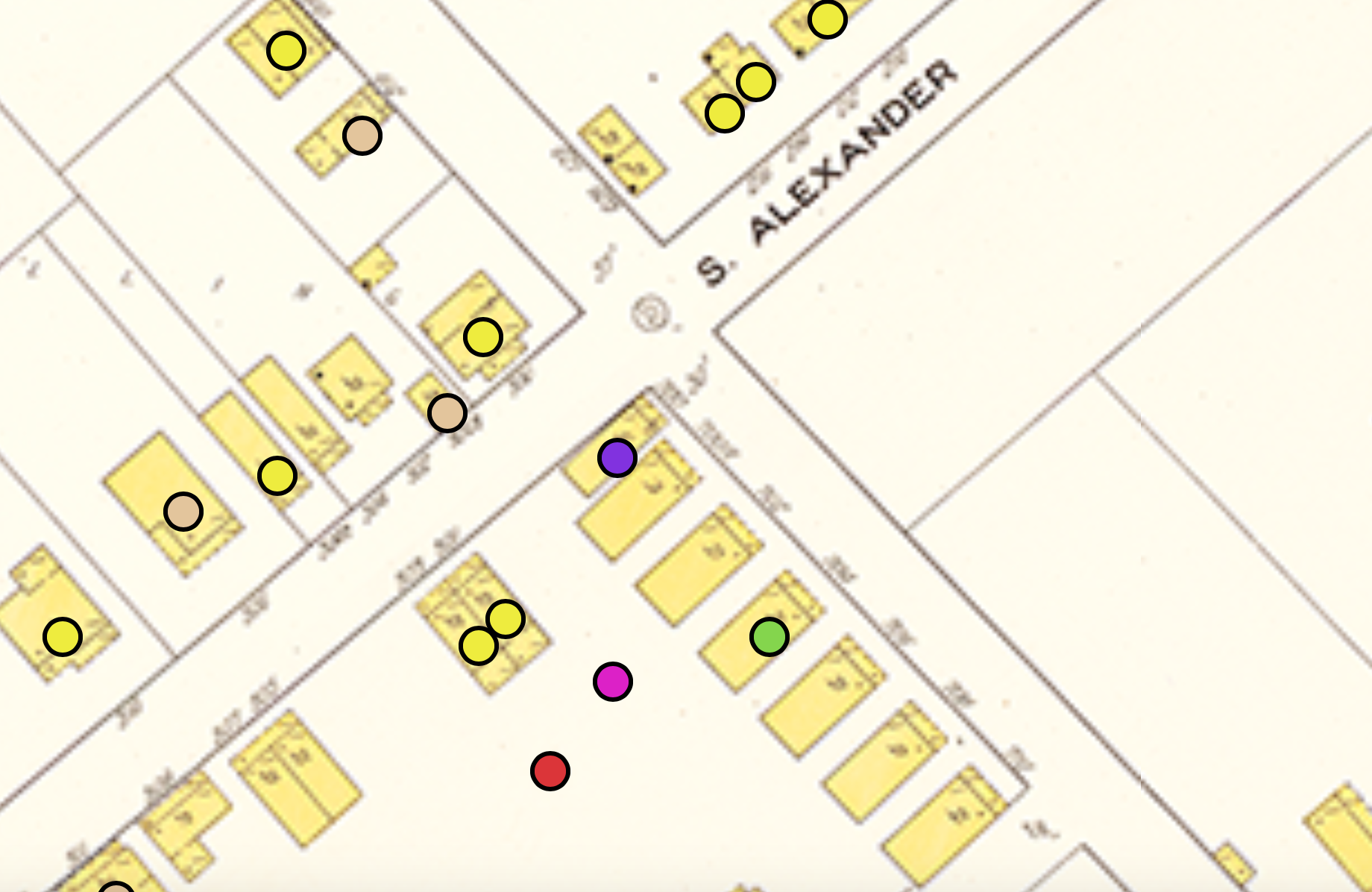
Historians and American scholars are able to view this project and get a taste of what this city was like in 1911. Those interested in gaining information on America in the early 1900s in are able to view this project and actually learn about life during this time period. The map spotlights, allow audience members to acquire detailed knowledge about certain occupants lives in Charlotte during 1911. This gives these historians and American scholars insight on what the city of Charlotte was like before Charlotte’s true growth into a city.
For the past and present residents of Charlotte, they are able to use the interactive map to locate their own current addresses. This allows them to view what their house was used for back in 1911. This soothes the curiosity of what their homes once were in a cool and interactive way. This project is likely to attract new audience members who desire to know the interesting history of their home and city as it emerged in 1911.
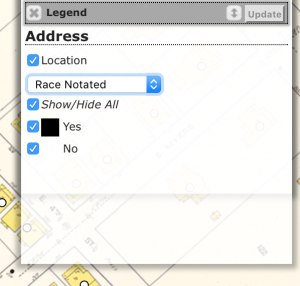
Those who have interest in economic, race, and architectural work may also find this project effective in their studies. There is a part of the key that allows you to look at whether race is notated by those who inhabited Charlotte in 1911. Sadly, the map only offers this questions as a Yes or No questions. Those interested in economics, are able to view the different types of buildings to see what was used for business, institutional, residential, and vacant to take a gander of what the economy was like. Lastly, those interested in architectural work are able to view what the buildings are now and compare them to what they once were in 1911.
Disciplines:
The disciplinary backgrounds of those who created Charlotte 1911 are based of a few different components. For starters, the creators of this DH project have a background specifically in public history. They aimed to interest the local members of the public in addition to people throughout the country. The public history group that assisted in the creation of this project was the Levine Museum of the South. Their goal as an establishment is to engage their audience members in the diversity and history of the South post Civil War. Their main audience focus is those who abide in the South of the United States. 
The other disciplinary background that inspired and helped the creators of Charlotte 1911 are city planners and economists. These contributors were not only able to find the races of people in buildings they inhabited, but also what the buildings were used for and create the interactive map. They discovered what buildings were what. Which were factories, which were churches, which were houses, etc.
Finally, the last disciplinary group involved in this project is the Digital Innovation Lab. The Digital Innovation Lab is part of the College of Arts and Sciences at The University of North Carolina. It focuses mainly on creating DH projects. These people use date science in creating their digital humanities projects. This group is made up of students and staff members of UNC. They all primarily have a background in creating digital projects and critiquing them.