About Building History
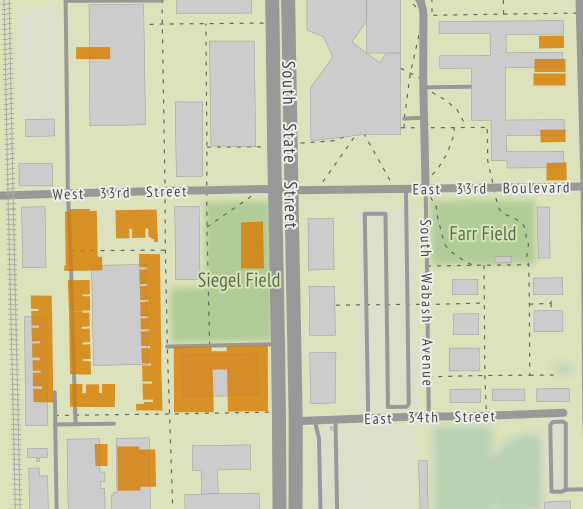
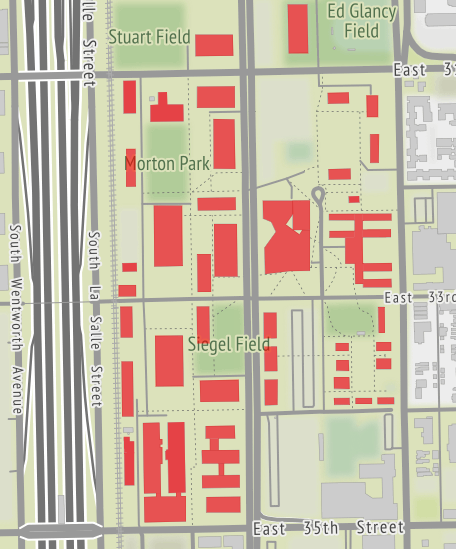
Building History was created and curated by the Paul V. Galvin Library at Illinois Institute of Technology. It is a digital collection that shows how Illinois Tech’s Mies Campus once was and how it is now. It examines the changes of the Bronzeville neighborhood and the campus since the opening of the Armour Institute in 1893. The campus is a landmark with 20 buildings designed by Ludwig Mies van der Rohe. The surrounding neighborhood, Bronzeville, was once known as Chicago’s “Black Metropolis” for many reasons. It was the home to African-American entertainment, jazz clubs, renowned artists and thinkers, and outstanding African-American owned businesses.
Building History analyzes and explores the intersections and overlaps between the rapid changing surrounding neighborhood, Bronzeville and the college campus. It depicts modernist innovations, neighborhood landmarks, and the conversion of storefronts to classroom buildings as the campus expanded and developed. The buildings have names and dates that are verified when possible and have documentation sources included on each building’s page. If, overtime, multiple names are created, the most recent and prevalent name is used, but former names are also provided with connected information and dates. Because of new campus construction, further historical research, and new features that will provide new ways to understand these buildings, the campus, and the neighborhood around it, Building History will continue to grow.
Course Information
The Building History Project Review was created by seven individuals at West Chester University. As an assignment for the Intro to Digital Humanities class, the class split up into groups containing between three to six students (team members are listed on the “Team Members” page). Each group chose a Digital Humanities project that they found interesting and wanted to analyze further. Students did this to learn and understand more about that incorporate space, place and location in the Digital Humanities.

Process
Marly Hartranft knew about Building History prior to being assigned this review project because she researched it for the DH Wiki for the class. All group members gave the thumbs up to review this project because it fit into the place, space and location theme. To communicate, we utilized the app, GroupMe, because it was more accessible for some team members. One feature that was very helpful in this app, was the calendar. We were able to set meeting dates and times in the built in calendar so all members were given reminder notifications. Our group got together during our regular class time to brainstorm ideas, work, and collaborate on this project in a timely and organized manner.

WordPress
We used WordPress to create this project review. All team members had admin privileges that gave them access to create new pages, add content, and edit the work done by others. Marly has had experience with WordPress before so it was easy for her to create the layout and design. Other members were able to come to her to ask questions on how to do certain things regarding a page’s layout. Everyone was able to learn how to work WordPress which helped us successfully create the Building History Project Review.