Overview of Building History
Building History is a project in the digital humanities (DH) that displays the change of the famous Illinois Institute of Technology’s Mies campus over time. The Mies campus is significant because it has 20 buildings designed by the famous architect, Ludwig Mies van der Rohe. His architecture is astonishing, which is why this project was created.
The purpose of this DH project is to show how the campus once was and how it looks today. Even though this project does not create a narrative for the campus, through the use of an interactive map and timeline, not only users are able to learn about the history of the campus but they can also see what buildings used to be present on the Illinois Institute of Technology campus.
Users are able to access Building History on computer and on a mobile device. The accessibility is user friendly for various devices, which makes it easier for more people to view and interact with the map and all of the information that it has to offer.

Project Description
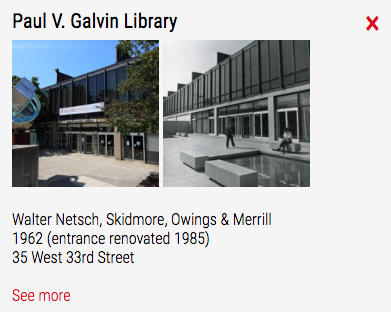
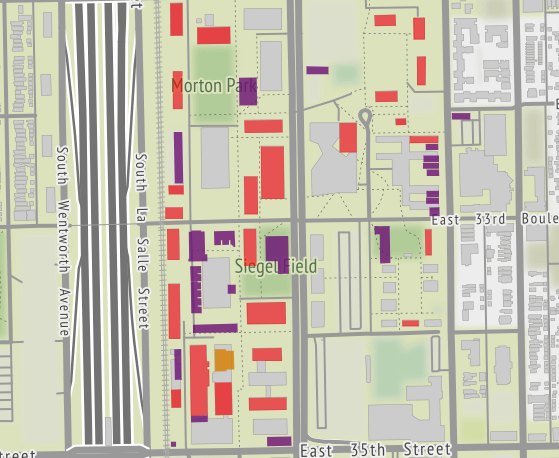
The site has an interactive map of the campus with a timeline at the bottom, allowing users to scroll to their desired year and view the architecture of that time. Each building on the map is a clickable link which enables users to view additional photos and information about that specific building. In the early 20th century many prominent black civil rights activists, artists, baseball players, actors/actresses, and jazz musicians resided in Bronzeville. It was known as “Black Metropolis” and was home to the most significant concentration of African-American businesses. The interactive map illustrates the transformation of the town from a black metropolis to a college campus building by building. The buildings that are still standing today are shaded in red, the structures that no longer exist are shaded in purple, and the bronze shaded buildings indicated locations that were Bronzeville businesses or civic buildings.
Building History is an on-going project that will continue to grow in the future as new construction changes are made to the existing buildings that are on campus at this moment. Further historical research and new features will also provide new and improved ways to understand the buildings, the campus as a whole, and the neighborhoods surrounding it.

Significance
So why is Building History a significant project in the Digital Humanities? Well, Building History is designed for those that want to observe, learn, and analyze the change over time with Illinois Tech’s campus buildings. It is a prime example of a project that illustrates the importance of space, place, and location within the Digital Humanities. The detailed and well-developed interactive map provides a successful tool for users to easily access information regarding the history of buildings.
Through the use of an interactive map that includes different colors to represent buildings from different eras, it is clear that the creators of this project have thorough knowledge of the campus’ history. By color coding the past and present buildings, the accessibility allows users to grasp a better understanding of the history and growth of campus.
Team
Building History was created by Adam Strohm and Max King. Strohm is the Digital Initiatives Librarian and King is the Information Technology Librarian, both at the Paul V. Galvin Library. Strohm and King relied on the research that was conducted other individuals that work at Illinois Tech or from those that are familiar with this campus. The research that was conducted by Catherine Bruck, a former Archivist at Illinois Tech, was the main source of finding information to incorporate into this project. There was also help from two individuals from the Graham Resource Center, Kim Soss and Molly Lee, that offered support in the making of Building History. University faculty also donated their time to provide assistance, help and/or advice for the project, those individuals include: David Baker, Leroy Kennedy, Office of Community Affairs and Outreach Programs, and Michelangelo Sabatino. Building History was also granted permission to use some photos of the archival photographs from Rolf Achilles and the Chicago History Museum.