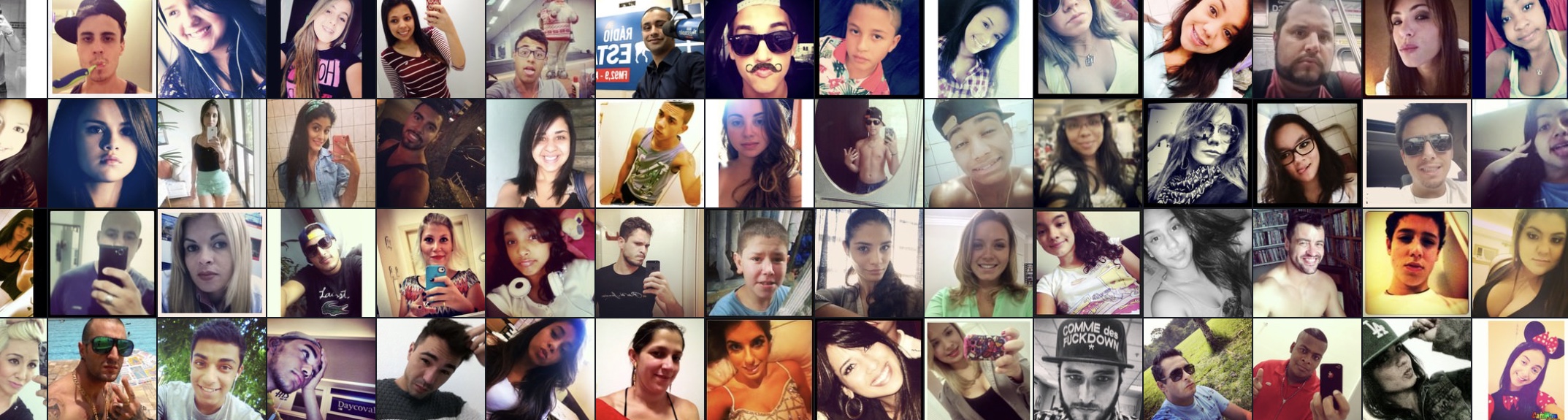
Selfiecity investigates the style of self-portraits through a mix of theoretic, artistic, and quantitative/qualitative methods in five cities across the world and presents the results in a theoretical and artistic way. These cities include Bangkok, Berlin, Moscow, New York, & Sao Paulo.
This project started with a group of eight people lead by Lev Manovich from City University of New York. The project was made within a week during December 4th-12th of 2014.
They present their findings about the demographics of people taking selfies, their poses and expressions. Rich media visualizations called imageplots assemble thousands of photos to reveal interesting patterns. They call their interactive portion of the website the “selfiexploratory” which allows you to navigate the whole set of 3200 photos. They also include theoretical essays that discuss selfies in the history of photography, the functions of images in social media, and methods and dataset.
They sample and look for things like gender and age profiles per city, smile distributions by gender and city, and poses.
Findings/Significance
This project is based on a unique dataset they compiled by analyzing tens of thousands of images from each city, bot through automatic image analysis and human judgement.
Main findings:
- People take less selfies than often assumed.
- They found that there a significantly more women selfies than men selfies.
- Most people in the selfies are pretty young (estimated average age of 23.7).
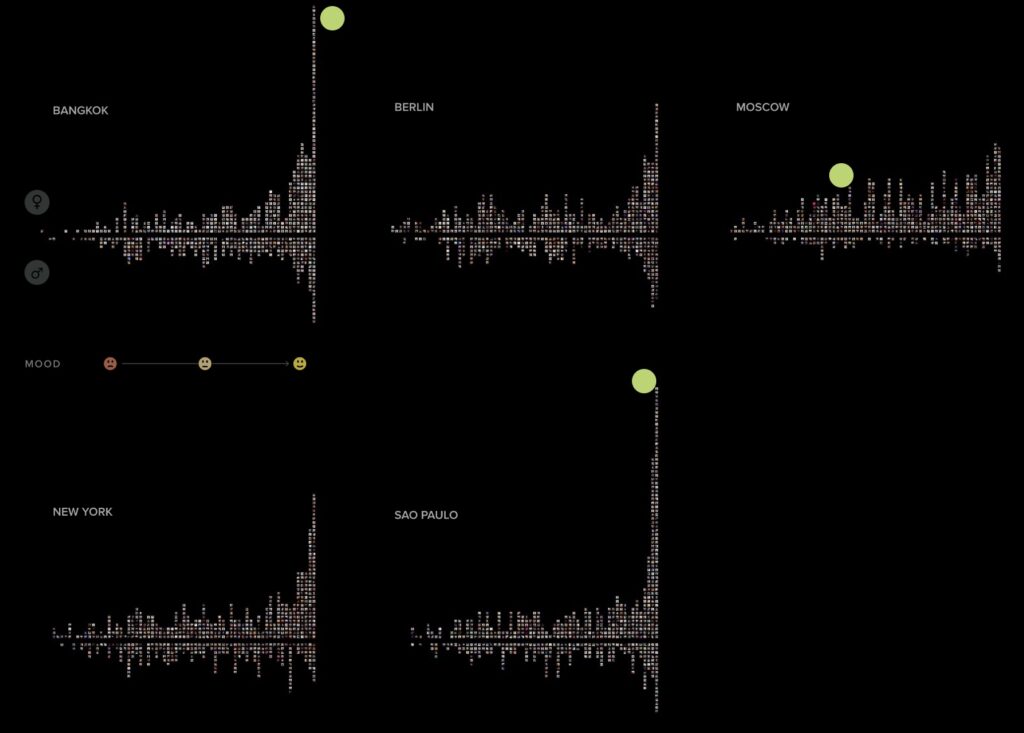
- Bangkok and Sao Paulo has the most smiling faces and Moscow smiles the least.
- Women strike more extreme poses and have more expression (especially in Sao Paulo).
How They Did It
- Step 1: randomly selected 120,000 photos (20,000 to 30,000 photos per city) from a total of 656,000 images collected through Instagram
- Step 2: 2-4 Amazon Mechanical Turk workers tagged each photo worked on analyzing each photo
- Step 3: they then narrowed it down to 1000 photos for each city and submitted them to the Mechanical Turk workers again to guess the age and gender of each selfie
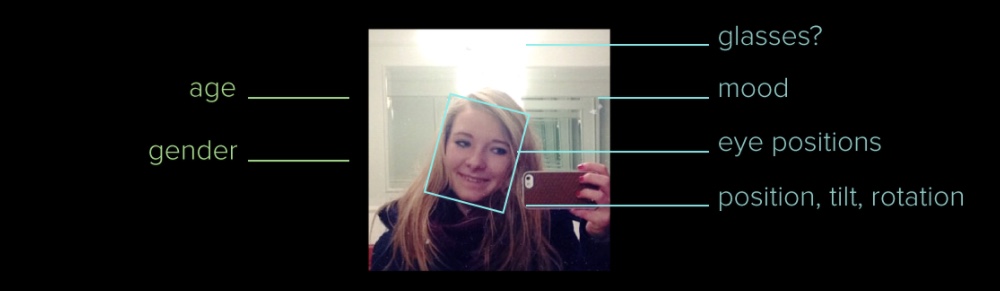
- Step 4: on the resulting set of selfie images, they ran an automatic face analysis that supplied them with algorithmic estimations (nose and mouth positions, degrees of different emotional expressions, etc)
- Step 5: 1-2 members of the project team examined all these photos manually to look for any mistakes. They ended up with 640 selfie photos for every city.
Gender and Age
They inspected thousands on photos in order to supplement their rudimentary automatic face analysis with human judgement to group gender and age. They had thousands of photos inspected by Mechanical Turk workers who estimated age and gender of the people in the photos. The results shown below shows the average estimated age of the selfies in each city and the percentage of men and women in each picture as well.

Smile Distribution
They can determine which city smiles the most or least in their photos by their imageplots. It shows mood within the city through males and females.
Poses
Within each city that they studied, they created grids that arrange photos normally, cropped, and cropped and rotated. They analyze head tilt, looking up or down, and the center of their faces within the image and from there, they group the photos into normal, cropped, or cropped and rotated. There are buttons you can press with each of the studied cities that lead you to different images of people from that certain city. They carefully studied each pose in all five cities.

Selfiexploratory
The selfiexploratory shows the different data they collected. These grids and maps are all interactive and you can browse the different data they collected. Each grid you click on will lead you to pictures that exemplify that grid. All of the grids/maps are interactive.


