Two values from digital humanities that the project seems to have is openness and collaboration. Mapping Police Violence states that “the data collected, coded, and made available belongs to the public” and “should not be owned by any platform.” So, Mapping Police Violence was not created to generate a profit. Instead, it’s for the public to use.
But another huge part of the project is the collaboration. Mapping Police Violence is “always open to partnerships and collaborations to improve the methodology and/or share best practices.” Mapping Police Violence even directly states that they “center collaboration over ego.” They are also very open that previously they used the other databases that track police violence like Fatal Encounters and Washington Post’s Fatal Force to collect data.
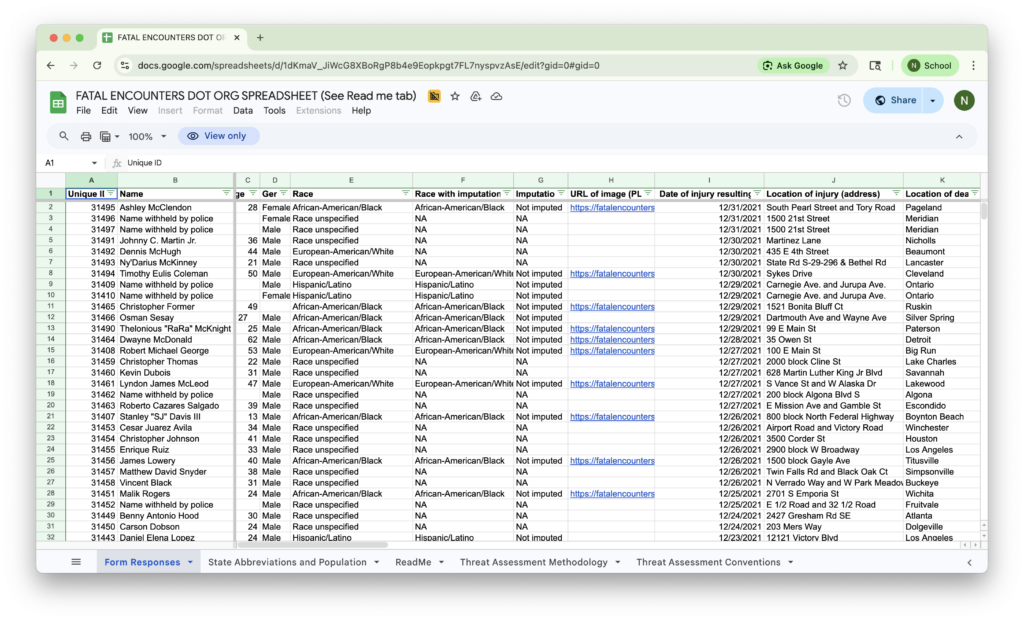
Fatal Encounters is a project that tries to “document all deaths that happen when police are present or that are caused by police.” Mapping Police Violence also directly acknowledges that the founder of Fatal Encounters “advised the initial development of the project and continues to advise and collaborate on the methodology.”

Fatal Force was created by the Washington Post to “count every fatal police shooting in America.” The database was created in 2015 after Ferguson. But it was recently shut down in 2025. The website only contains data from 2015-2024.

However, the collaboration value of Mapping Police Violence is subject to doubt since the project was allegedly a copy of Samuel Sinyangwe’s original website. Even though the court case has been settled by both parties, the website is still not clear about who helped in the creation of the project and does not give any credit to Samuel Sinyangwe for his role in helping to create the original Mapping Police Violence website, which it took inspiration from.