Overview of Tools
The Walt Whitman Archive relies on several key digital tools to gather info, process, and present its materials. Two of the most important are TEI-XML, which structures and encodes Whitman’s texts, and HTML/CSS, which display that encoded content as readable, accessible web pages. Together, these tools support the project’s goals of accuracy, usability, and long-term digital preservation
Tool 1: TEI-XML
TEI-XML is a markup standard used in Digital Humanities to encode texts with detailed structural and editorial information. It allows editors to mark revisions, deletions, page breaks, handwriting changes, and other textual features
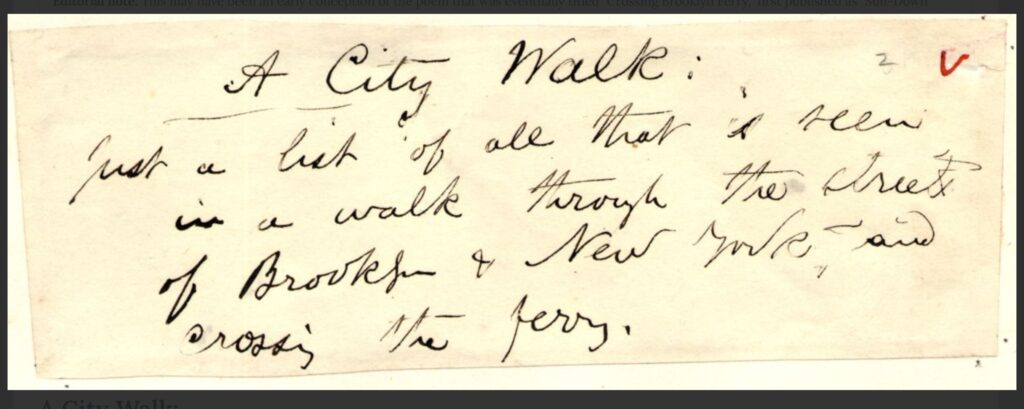
The use of this in a project was in the manuscript transcriptions in the Walt Whitman Archive
Other Uses:
- Published editions
- Editorial notes
- Bibliographic metadata

Tool 2: HTML/CSS
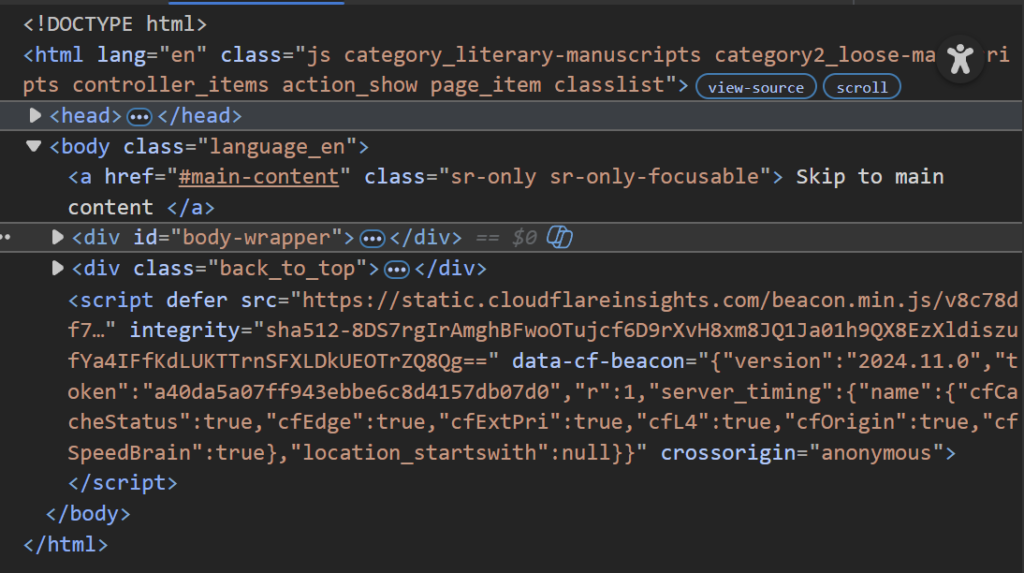
HTML structures the transcription pages and organizes how Whitman’s texts appear on the site. By using HTML to format headings, paragraphs, navigation elements, and transcription blocks, the Archive ensures that complex encoded content is displayed in a clear, readable, and accessible way.
In this project, HTML plays a central role in turning encoded manuscript data into a readable, structured webpage.
Other Uses:
- Building websites
- Online exhibits
- Supporting accessibility features
Link to DH
TEI-XML provided the structured encoding needed to preserve Whiteman’s manuscripts in a scholarly, machine-readable format, while HTML/CSS present that encoded materials in a clear and accessible way on the web. Together, these toots support core Digital Humanities goals by ensuring that historical texts can be accurately represented, easily navigated, and sustainably preserved for long-term public use.