Overview of the Workflow
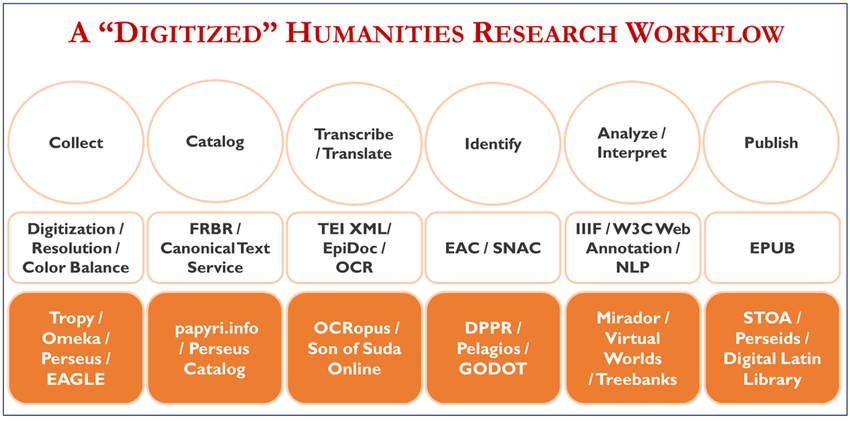
The Walt Whiteman Archive follows a structured digital workflow to transform historical materials into accessible online editions. For this project, I focused on the Manuscripts section because it demonstrates the full process of most clearly – from digitizing the original pages to encoding them and finally publishing them on the web. Manuscripts are first scanned and transcribed, then encoded using TEI-XML to capture Whitman’s revisions, structure, and textual features. This encoded data is processed and displayed through HTML and CSS, which format the transcription into a readable and navigable digital edition for users
Critical step 1:
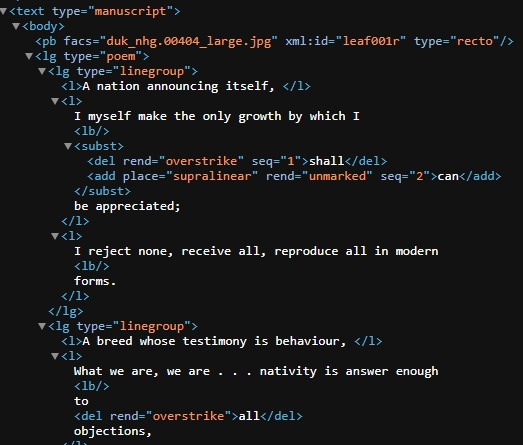
One of the most important steps in the Whitman Archive’s workflow is the encoding of each manuscript using TEI-XML. After the manuscript is transcribed, editors apply TEI tags to represent the structure and editorial features of Whitman’s writing. This includes marking line breaks, page breaks, deletions, additions, unclear text, and other revision marks
This is critical because TEI-XML preserves the scholarly integrity of the manuscript. Instead of flattening the text into plain paragraphs, TEI captures the complexity of Whitman’s revisions and writing process. It also makes the text machine-readable, allowing it to be transformed, searched, and reused across digital platforms. Without TEI-XML, the Archive would lose the ability to represent the manuscript’s structure accurately or support long-term digital preservation

Critical Step 2: HTML/CSS
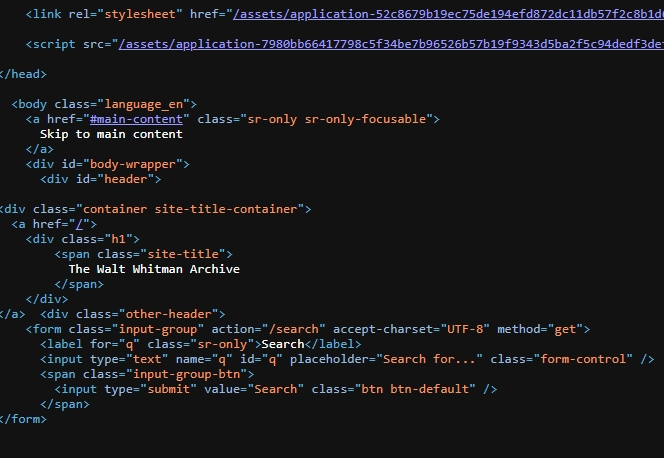
After the TEI-XML file is created the next major is transforming that encoded data into a readable webpage using HTML and CSS. HTML provides the structural framework for the transcription, organizing it into divisions, paragraphs, spans, and other elements that mirror the encoded structure. CSS then styles these elements so the editorial features – such as deletions, additions, spacing, and line breaks – are visually clear to the reader.
This is essential because it turns the encoded data into a usable digital edition. TEI-XML alone is not meant for direct reading; it requires transformations into a web-friendly format. HTML/CSS make the text accessible, legible, and visually aligned with the manuscript’s original form. This ensures that users can navigate the transcription easily and understand the editorial features without needing to read XML code.