
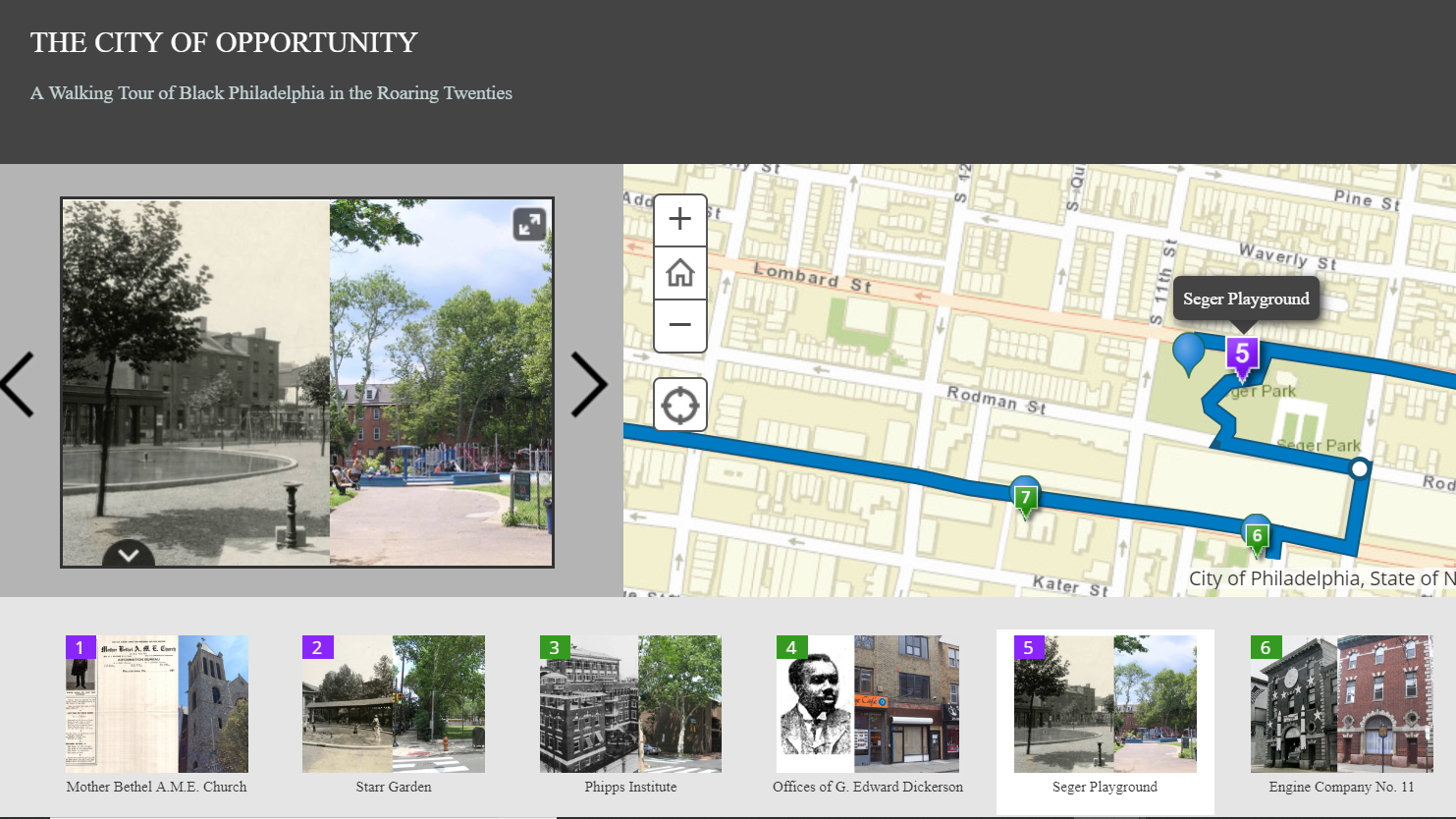
Peer Project: Goin’ North
A similar project to Townrow’s Mapping the Rebellion is Goin’ North. Goin’ North is project that tracks the northern migration of African American’s during the early parts of the 20th century. It was developed by graduate students at West Chester University.
Both projects are important to Pennsylvania’s history even though they are about different eras – The Whiskey Rebellion started in the year 1791, while the great migration occurred during the early 20th century. Both projects include an interactive map and tour. The project includes a walking tour of Philadelphia while Mapping the Rebellion has a driving tour of western Pennsylvania. This project uses ArcGIS while the Whiskey Rebellion uses SoundCloud.
Goin’ North, however, is far more detailed and in depth than Mapping the Rebellion. Goin’ North has 558 items compared only 33 for Townrow’s Whisky Rebellion. It also contains an extensive amount of interviews with more photos and information.
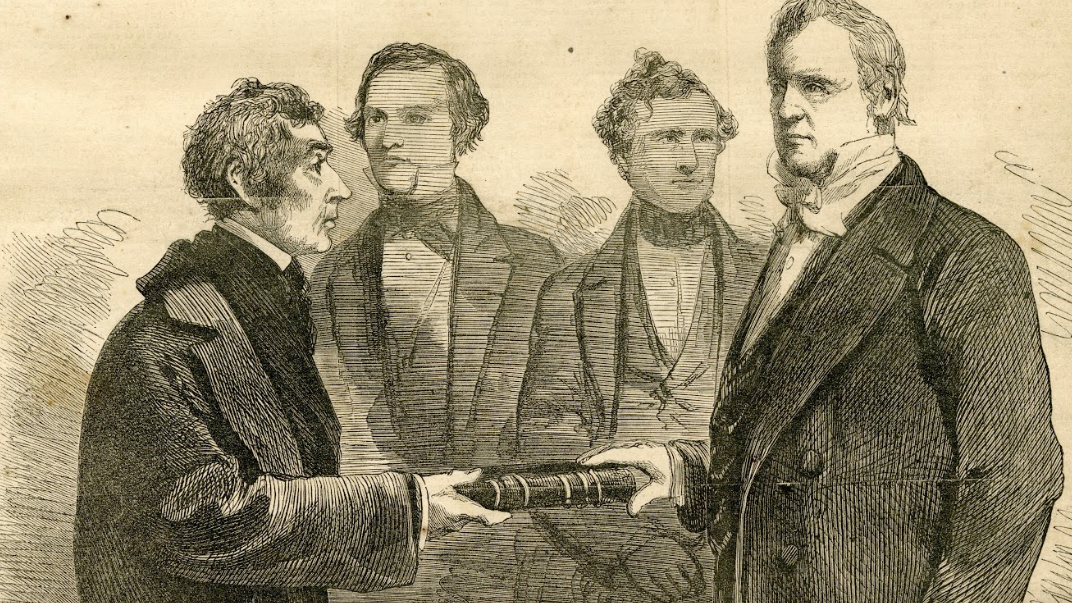
Peer Project: President James Buchanan: Path to the Presidency
Another project developed by Stephanie Townrow is about James Buchanan, the 15th President of the United States. The project, which is a slideshow featured on Google Arts and Culture, highlights the key moments leading up to Buchanan’s inauguration. The timeline relies on Lancaster History.org for pictures of Buchanan, his hometown of Lancaster Pennsylvania and historical documents pertaining to his presidency.
A similarity between this project and the Whiskey Rebellion project is that it covers a key moment in American history that is forgotten in modern society – Few people ever talk about the Whiskey Rebellion – And Buchanan is largely ignored because of his reputation as one of the worst presidents in United States history. Another overlap between the two projects is that Buchanan and the Whiskey Rebellion are part of Pennsylvanian history.
However, aside from their historical and geographical similarities, the Buchanan project is nothing like the Mapping the Rebellion project in terms of quality and methodology. Strikingly, Townrow does not properly address Buchanan’s despicable support for slavery and white supremacy in America.
Townrow writes that he ran on a platform that “emphasized non-intervention on slavery” instead of condemning him for continuing the barbaric and inhumane practice. She also says that Buchanan warned of “Republican extremism” on the issue of slavery without making clear that “extremism” in Buchanan’s opinion was abolition. Even if Buchanan had a “personal distaste” for slavery, as Townrow writes, the fact that he upheld it in pursuit for political power is disgraceful nonetheless. Given his pro-slavery position, it is easy to see why he is regarded as one worst presidents in history – A designation that Townrow only mentions very late into her slideshow.
The Buchanan project is surprisingly weak given how well Townrow develops the Whiskey Rebellion project. It is not effective because it ignores many pertinent facts about the infamous Democratic President, and it is not very detailed as it is merely a slideshow. The project could have been powerful if she properly analyzed Buchanan’s reprehensible actions as the period leading up to the civil war is a critical period in American history. Townrow falls way short of this goal, however.
The analysis of these peer projects, Goin’ North and James Buchanan: Path to the Presidency, supports our evaluation of the Mapping the Rebellion project. While it is a very good project, it could have been better if Townrow included more items. Mapping the Rebellion doesn’t match the superiority of Goin’ North. However, it is far better than the Buchanan project.