As for input, the team took inspiration from information architecture of eight websites of museum collections, ingesting data from the physical coins and the digital records from catalogues. Using this data, they produced an output of the HTML page for visualization.
The interactive site lets you digitally sort through and explore all the 26,000 coins in the collection. During the design process, the main focus was making sure it was an inviting interface for users. It reflects in how it presents information. The site records eight fields including the name of the object, where it’s from, specific location, the country, the material type, the weight, the width and data.
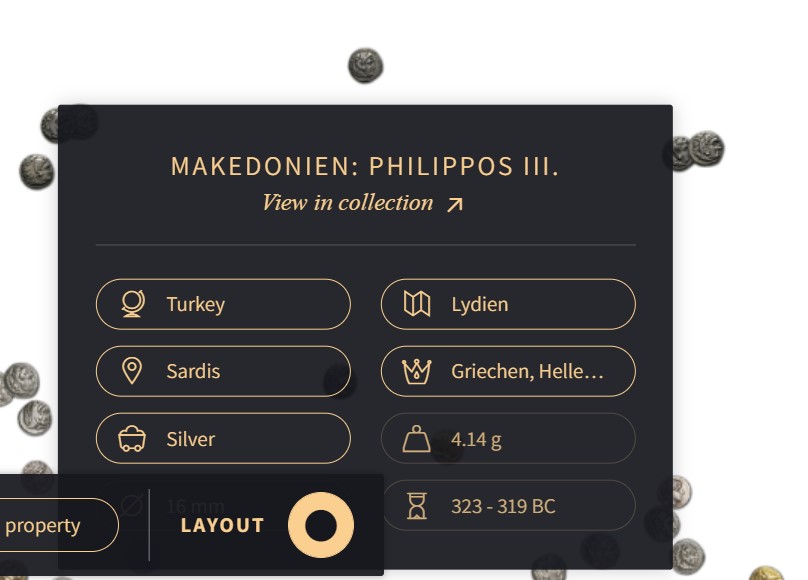
The dynamic quality of the graphics is seen through the combination of the concrete quality of the coins via images and the abstract data patterns derived from semantic metadata. The online catalog currently contains over 30,000 digitized objects, for which the museum provides detailed, high-quality metadata and images. (OLH.)
