Overview
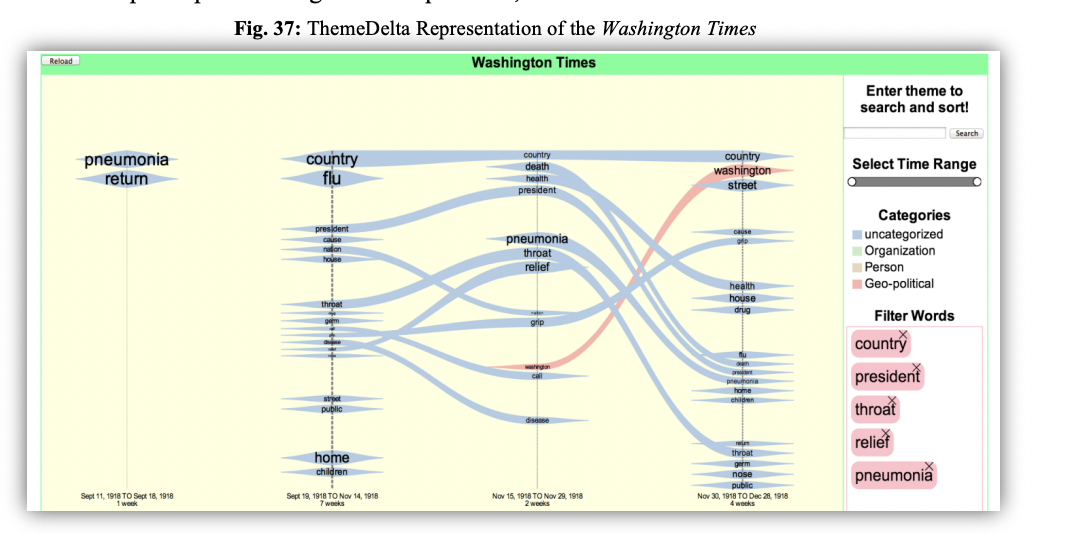
The project began with data collection as newspaper texts were gathered from Chronoclining America (U.S.) and Pells Prairie Provinces (Canada). They then used data processing to go through the texts and filter out articles unrelated to the influenza pandemic. Computational analysis was done, in which they identified periods where topics shifted, extracting clusters or related words or themes. Visualization and interpretation were conducted using ThemeDelta, allowing researchers to track topics and tone across time segments, highlighting patterns.
Critical Step
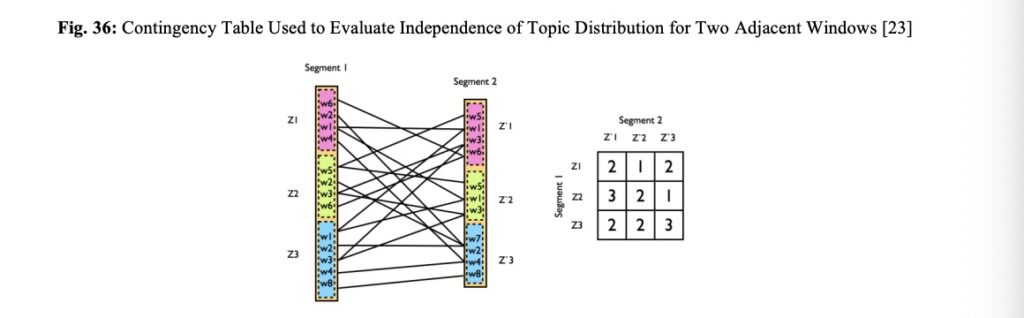
The critical step of this project was dynamic temporal segmentation and topic modeling. The step is critical because it structures the data over time, revealing changes in public discourse. Without this step, the patterns in the evolution of topics and framing would be hidden. It is central to answering the project’s research question about how newspapers covered the 1918 pandemic. Directly relating the the tool talked about in the previous page, ThemeDelta as it extracts and visualizes trends and patterns.
Documentation
The documentation describes the workflow and critical methods. Data sources are cited, and the link between segmentation, topic modeling, and interpretation is explained. However, some computational details are not explained or provided.