A digital tool that is used in psychology is VR, formally known as Virtual Reality.
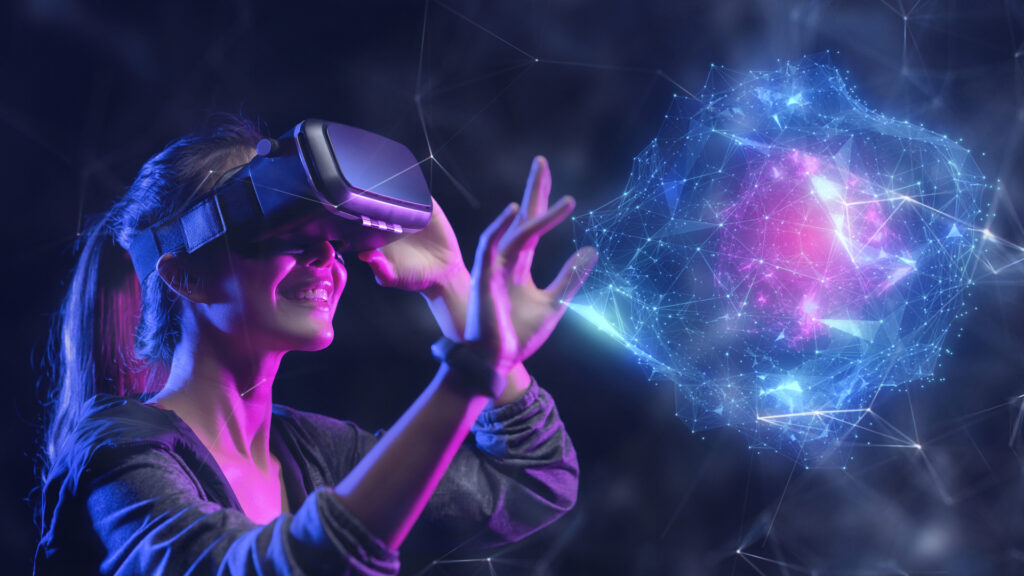
VR, Virtual Reality, is simulated experience that employs 3D near-eye displays and pose tracking to give the user an immersive feel of a virtual world. Wikipedia
When thinking about VR, many people’s first thought is linked to gaming or gaming consoles but it has many different uses and benefits.
Virtual reality can be beneficial in the aspect of psychology, and a prime example is that represented in the digital project Memory Eternal. This digital project utilizes VR to allow users to relive memories and experience feelings of grief and loss at different levels. Essentially it is utilized as a tool that can see how users react to specific simulations or others that are similar.
The Virtual Reality that is used by is called the Oculus Quest 2, created by Meta, is actually the previous version as the Meta Quest 3 was released in October of 2023. The Quest 2 VR first came out in October of 2020 and was originally given the name of Oculus Quest 2. The set comes with two AA battery powered controllers along with the headset. Quest 2 can support games and all softwares as it gives users a realistic feel to any game or software that they plan participate in.

VR can relate back to digital humanities due to its potential to help us better understand culture, and historical experiences, or better understand and analyze literature of the topic. Today, VR is used in digital humanities to utilize virtual archives, virtual storytelling/historical events, and even culture preservation.
Virtual Reality has its benefits among many different subjects, and digital humanities is not an exception.