Summary description:
When one thinks of physical activity, it is often viewed as an individual choice. While that is true, the Activity Inequality website examines physical movement on a global scale and outlines how different factors affect one’s activity level. The website draws conclusions about the reasons for gender activity inequality, social factors that affect movements such as walkability scores which urges policymakers to implement better policies to encourage movement, and found that this inequality predicts obesity better than average activity does.
Key Analysis:
Gender Gap:
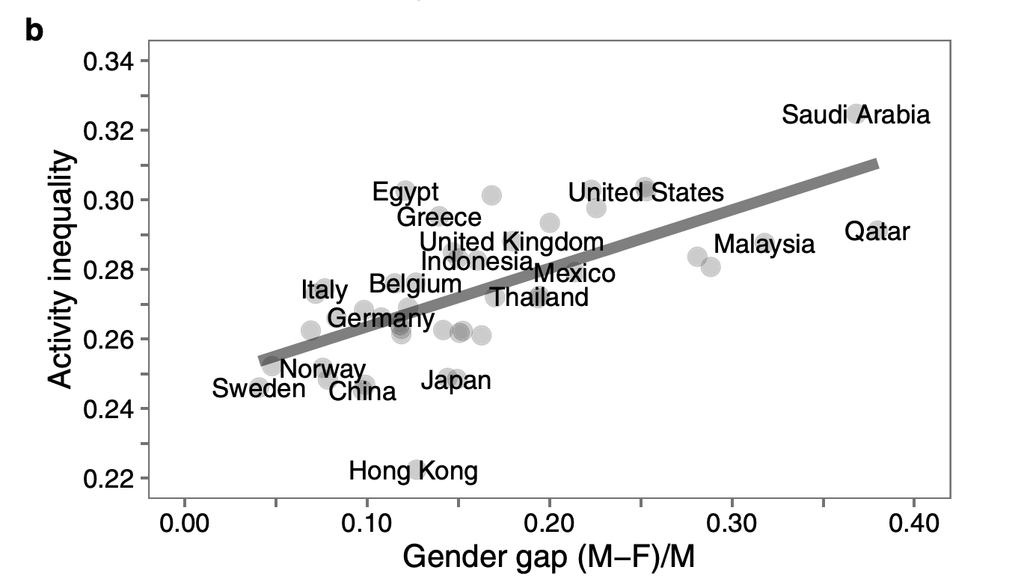
- The project found that women were less active than men in all 46 countries analyzed.
- This gap explains about 43% of the variation in activity inequality between countries.
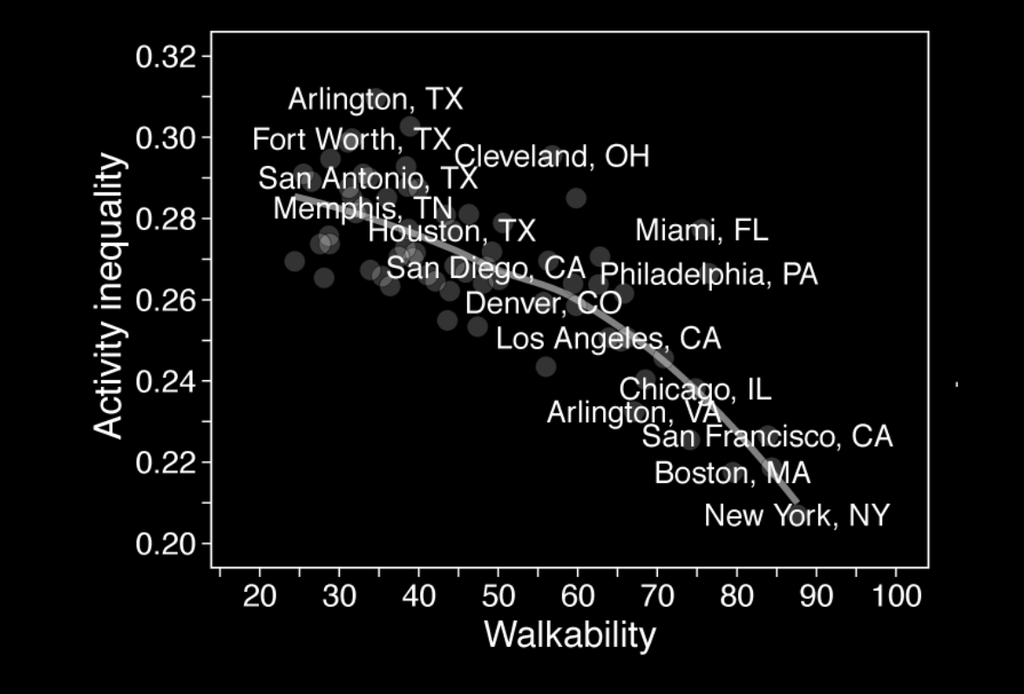
- In cities where the walkability score was higher, the inequality was low, and women were found to be more active.
The paper ranks Sweden as having the smallest gender gap and Japan has similar male and female distributions. Countries like Qatar and Saudi Arabia have the largest gender gap. Additionally, cities with high walkability scores have lower inequality rates and women are more active. Big developed urban cities usually have high walkability scores like New York and LA. In these areas, the gender norms are not as significant and everyone is able to live life as they please. However, in less developed cities or in countries like Qatar and Saudi Arabia, gender norms are still followed. Women are expected to stay home and take care of the house which could contribute to the inequality factors. Along with the social expectations, there are also safety concerns for women especially at night. This could also factor into why women are less active. If the walkability score is high, that means the cities are modern and developed, therefore expectations are not enforced which is why the inequality is low in those areas. These are the hypotheses as to why the gender gap is so huge in physical activity but the paper did not test these. Changing societal expectations based on genders, and urging policymakers to implement better safety in areas will most likely bridge the gender inequality gap in activity.
Issues, Groups, and Approaches
Issues:
- Gender inequality, concerns related to physical safety and social expectations.
- Poor urban planning and government management, contributing to gender inequality.
Groups centered or affected:
- Women
- Urban planners
- Governments
Approaches:
- Urban Planning: Build cities with sidewalks, and more pedestrian friendliness to encourage movement.
- Government: Grant permissions for to build pedestrian friendly environments, and incorporate more security to ensure safety while walking.