What they want to accomplish:
The paper’s overall goal is to understand the principles that shape physical activity, and look at things that are needed to curb the global pandemic of physical inactivity and the 5.3 million deaths per year associated with inactivity. Since the knowledge of physical activity on a large scale level is limited, they used smartphone data to measure activity on an international level. Additionally, they hope to improve physical activity and health by urging government officials and urban planners to implement better policies to achieve the goal.
Three main goals mentioned in the paper:
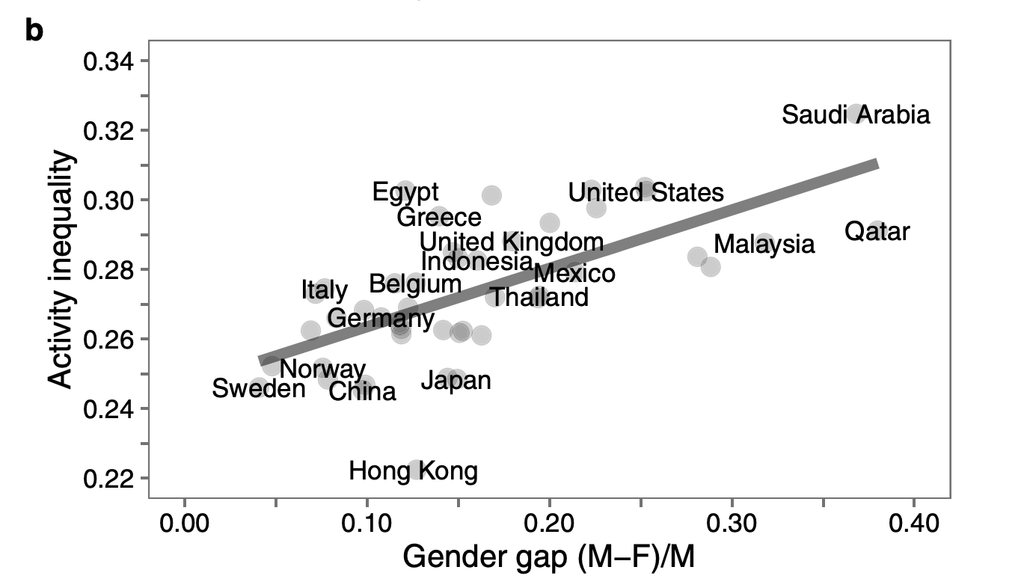
- Quantify disparities in the distribution of physical activity in countries around the world
- Identify the relationship between activity disparities and obesity
- Explore the role of the built environment, walkability score, to create more equal distribution of activity across populations.
Goal Analysis: Exploring the role of built environment
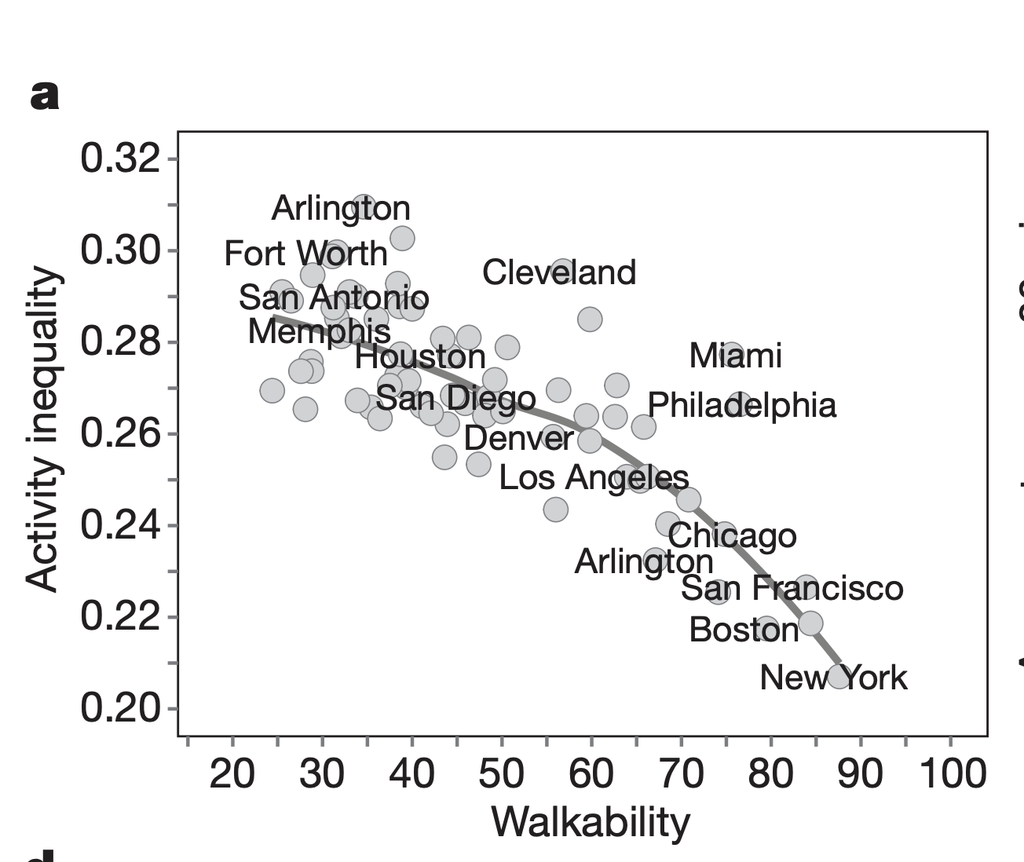
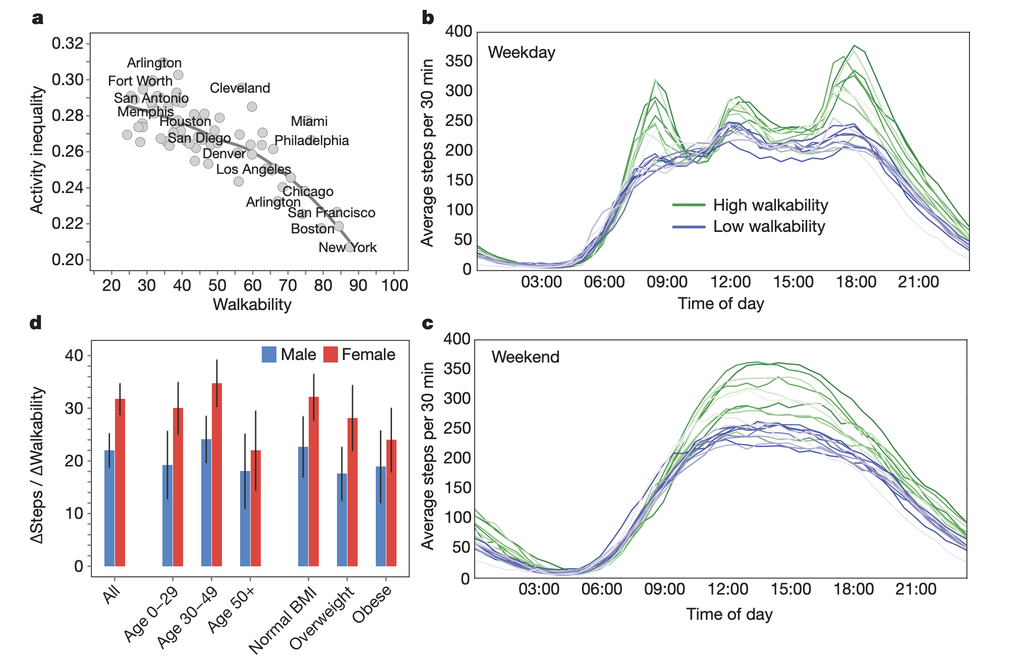
One of the main goals of this project is to analyze how external factors affect movement on a global scale. The external factors mainly include the environment around us. In some areas, there is no facility to walk even if we choose to, so we are forced to resort to some type of transportation. Or in some cities, it is just not safe to walk around. The main audience for this includes urban planners and government officials. They must work together to make the majority of the areas walkable with safe sidewalks and pedestrian crossings. Additionally, government officials must grant permission to make this accessible and implement measures to tighten security to ensure safety while walking at any time of the day. This goal mainly ties into the DH goal of analyzing and interpreting data. By gathering and interpreting the physical data around the world, they were able to find the issues which is gender inequality in activity. By identifying the issue we can take measures to fix it and improve the health of everyone. They also share their public data which promotes the DH goal of sharing cultural data, so urban planners and government officials can use it for research purposes and improve their policies.
Documentation:
The website provides their data and code in a publicly accessible github link. Anyone can access the link and they authorized it to use it for research purposes. Additionally, they showed relationship between multiple factors such as relating time of day and average number of steps, demographics and number of steps, and many more factors which can be used to identify issues and analysis purposes.