Economics and Digital Humanities share tools, goals, and values that support interdisciplinary collaboration. Both fields use digital tools to analyze large-scale human systems and communicate research findings. The use of computational analysis, open data, and collaboration demonstrates strong compatibility. Overall, Economics and Digital Humanities can effectively work together in digital research environments.
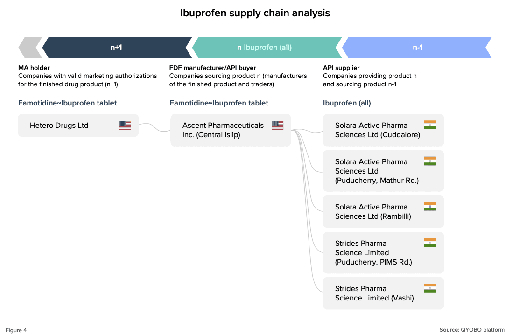
Supply Chain Management (SCM) and Digital Humanities (DH) tackle complexity from different but complementary angles. SCM focuses on efficiency, risk, and resilience—like mapping ibuprofen API chokepoints—while DH highlights ethics, storytelling, and labor realities within those same systems. Projects like Manifest show how DH methods can turn technical logistics data into accessible, ethical narratives.
Liu et al. (Frontiers in Environmental Science, 2023) reveal SCM scholars adopting DH-style tools such as knowledge mapping to strengthen sustainability and accountability. Our Life of a Generic Drug project mirrors this integration: SCM provides data on disruptions (e.g., COVID shortages, recalls), while DH adds patient perspectives and visual storytelling.
SCM–DH collaboration isn’t just possible—it’s transformative. DH offers ethical context and engagement; SCM contributes data precision and operational insight. Together they build supply chains that are efficient, transparent, and socially responsible.