The Armed Conflict Location & Event Data Project (ACLED) is a leading source of data analysis on conflict and political violence worldwide. ACLED tracks and records incidents across diverse regions, covering activities ranging from protests to armed conflicts, along with associated civilian impacts. The data collected by ACLED serves governments, researchers, and the general public who are interested in understanding the patterns and extent of political violence globally.

Who What When Where
Who: The founder of ACLED is Clionadh Raleigh she is the current president and ceo. She has four board members the two most notable being Ashley Moran who also serves as Deputy Chair and Loren Tarmo who has the title of Secretary and Treasurer.
Where: ACLED is housed in Wisconsin since 2014. ACLED has expanded to the entire world and typically covers areas in countries with conflict zones, emerging democracies, or areas with significant civil unrest.
When: The project started in 2005 with a focus on covering conflict in Africa. This project is happening right now. It has frequent updates that reflect real-time data as conflicts and political events occur.
What: The ACLED became a non profit in 2014 and has storng british leadership. The project captures data on events that only involve armed conflicts. So armed violence at protests, government interventions, militia actions, and violence against civilians.
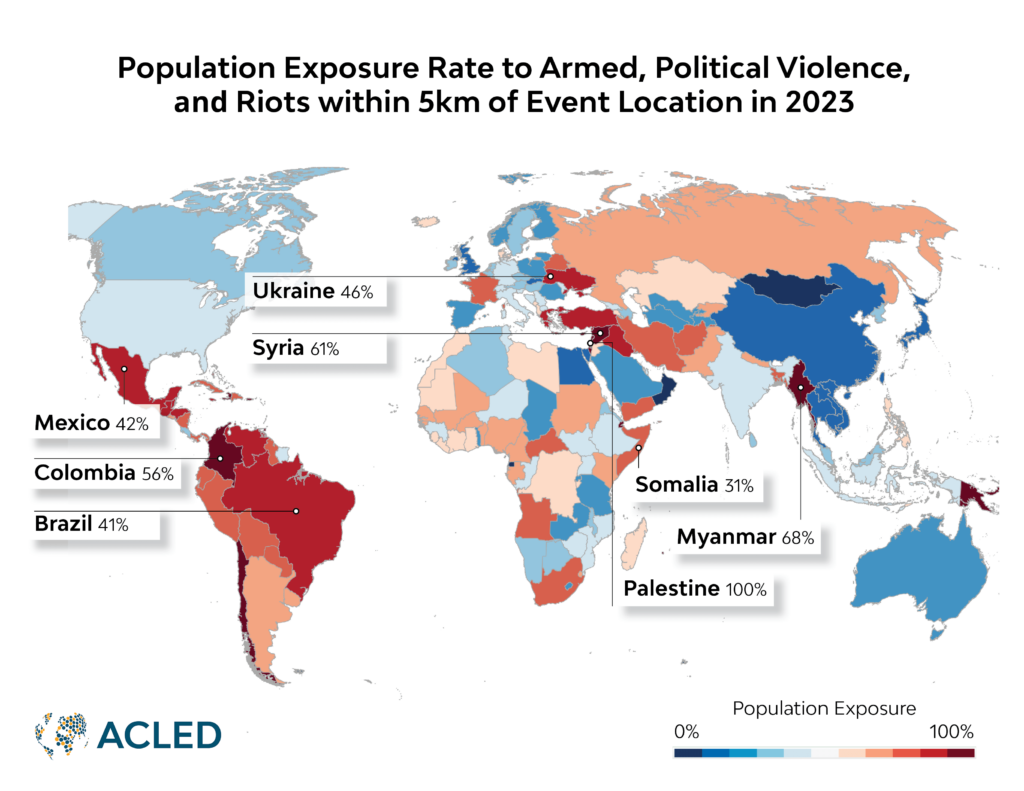
Detailed description of scope of project
The ACLED project scope includes real-time extensive data collection, verification, and categorization of political violence and protest incidents. ACLED’s analysts work with local sources to confirm event details. These events are then logged with information on the types of violence, people involved, locations, and incident frequency. This data allows for an understanding of conflict patterns, enabling organizations to respond effectively to current and emerging risks. By making conflict data accessible, ACLED’s project supports transparency, informed policymaking, and humanitarian interventions, aiming to foster a data-driven approach to addressing global security challenges.