Peers and Context is a page of the review to list projects similar to Mapping Islamophobia: Visualizing Islamophobia And Its Effects and how these peer projects work. The listed projects below not only possess aspects that are similar to Mapping Islamophobia: Visualizing Islamophobia And Its Effects, but are also projects that are very interesting and insightful. After viewing Mapping Islamophobia, I recommend checking these projects out for yourself.
Mapping Police Violence
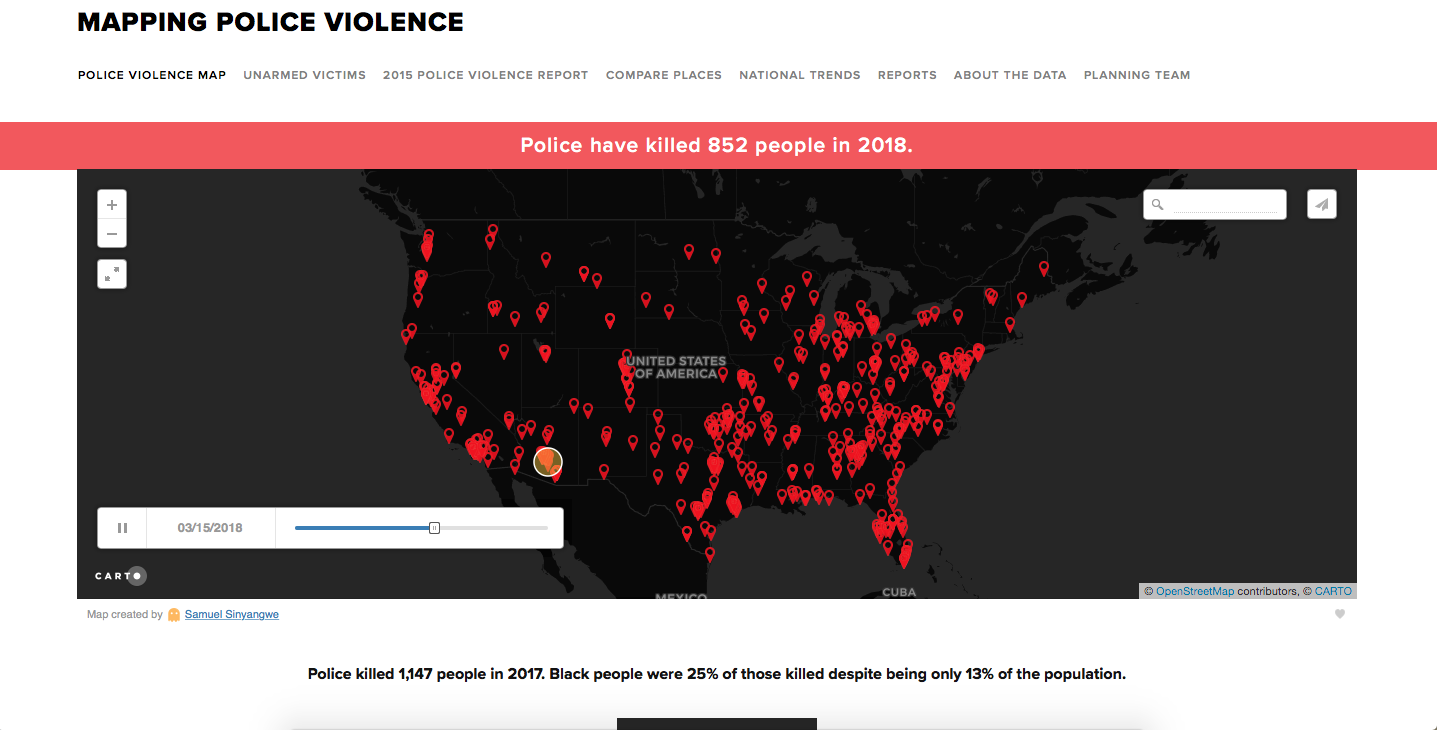
Mapping Police Violence is a research collaborative collecting comprehensive data on police killings nationwide to quantify the impact of police violence in communities. This projects takes data as far back as 2013 and plots them in a map, allowing their users to experience a interactive way to see the amount of police violence that occurs. These maps include information on 1,131 known police killings – including 1,067 arrest-related deaths (according to Bureau of Justice Statistics definitions) as well as 64 unintentional, off-duty and/or in-custody deaths. While there are thousands of events in the maps, Mapping Police Violence only charts police violence that is reported, which is indeed a major flaw in the project being that a large amount of police violence goes unreported. As for the similarities between the two projects, both of them take data and inject that into maps. Both projects use the same company and mapping system to create their maps too, that company being CARTO. If you have any questions about the Police Violence project, you can visit the Planning Team page to see the members they have to contact.
Digital Islamic Humanities Project
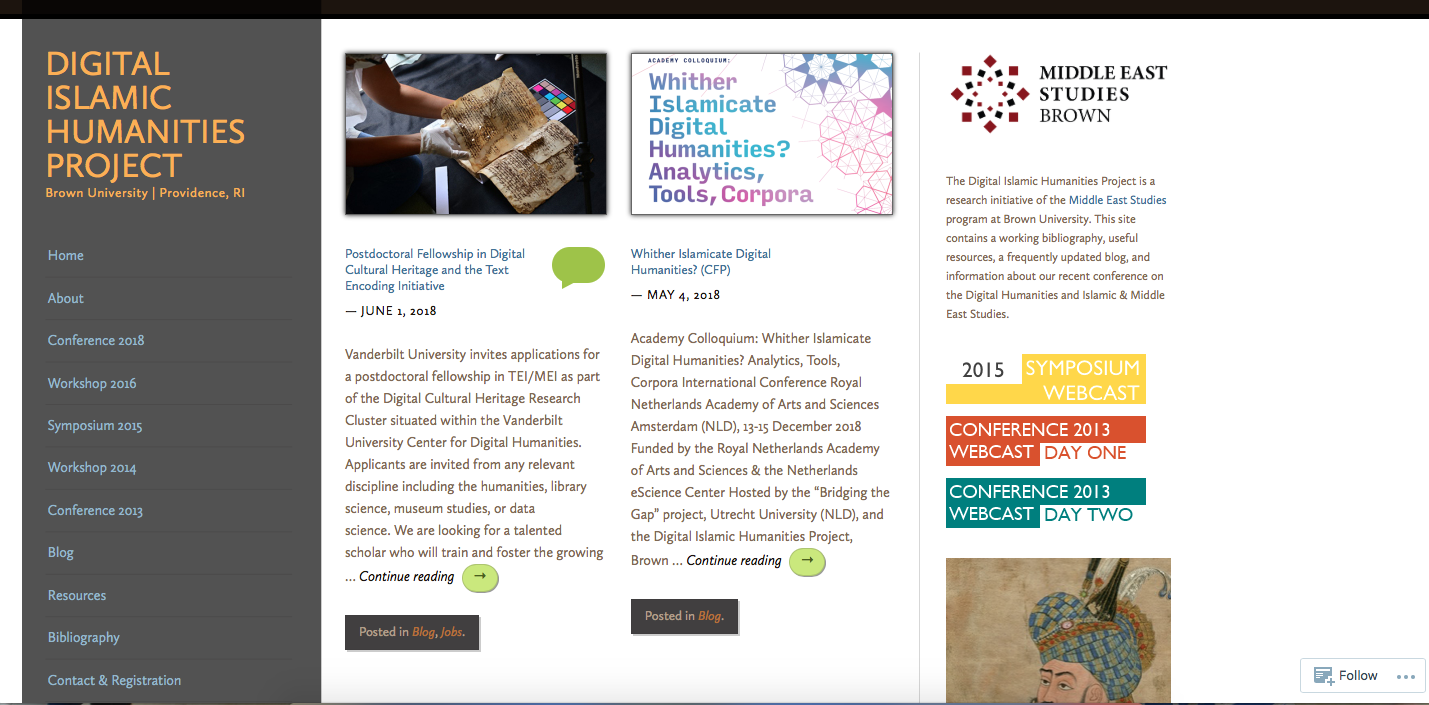
Digital Islamic Humanities Project is a research initiative led by Professor Elias Muhanna at Brown University. The project hosts a series of frequent gatherings, workshops, symposia, and other kinds of research projects, all oriented around the digital study of the Islamic world. Digital Islamic Humanities Project contains a working bibliography, a frequently updated blog, useful resources, and information about our recent conference on the Digital Humanities and Islamic studies. This project and Mapping Islamophobia: Visualizing Islamophobia And Its Effects are similar because they both focus on the same topic, Islam. With one project focusing on the good aspects of it while the other touches on the phobia around the religion. The archives on Digital Islamic Humanities Project ranges back to 2013.
