“You mean I’m to put on my Sunday Manners for this thing I created out of the squashed cabbage leaves of Covent Garden”4?
Professor Higgins is an interesting character to examine within the context of performativity as he is one of the play’s main facilitators of gender norms and societal speech. He uses his agency and power within the context of the play to shape and mold Eliza into a “lady”. “All expressions of gender are not fundamental in nature but just repetition of habitual acts and behaviors which create compelling illusions of gender through language construction” 8. Professor Higgins operates on this performative principal of gender to create Eliza into the image of a ‘woman’. What is interesting is to examine Higgins’ stock in Eliza, or rather the Eliza he has created. He has this to say: “of you’re going to be a lady you’ll have to stop feeling neglected if the men you know don’t spend half their time sniveling over you and the other giving you black eyes” 4. It is interesting to note that Higgins sees the creation of a lady done by the “the men you know”. In a way, Higgins is asserting that a woman is only considered a woman if she fits within the heterosexual normal. To this Butler would ask ” To what extent does the category of women achieve stability and coherence only in the context of the heterosexual matrix” 2? For Professor Higgins it seems that Eliza is only good enough as a lady after she fits societal norms to the letter. Higgins “[describes] gender in terms of linguistic performativity” and in doing so creates a constructed identity for Eliza, that is not Eliza in the least, but rather Higgins’ ideal woman 5.

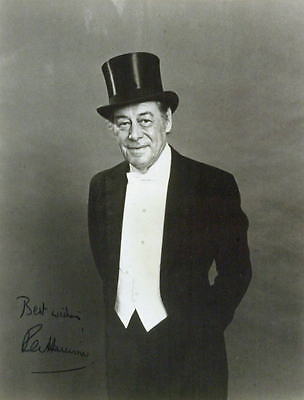
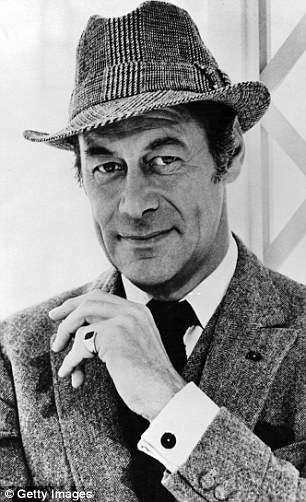
In scene five, Lerner and Lowe gave Henry Higgins interjections in Eliza’s final song “Without You” in order to appease the shows male lead at the time, Rex Harrison 7. In doing so, they take away Eliza’s agency and hand it over to Higgins as she ” becomes—once again—only an echo of Higgins” 7. Higgins says that “[he’d] make a woman and indeed [he] did” 4. It is clear to see the nature of performativity here in Higgins’ claims. He states that ‘made’ Eliza in a ‘woman’ but in all reality what he did was teach Eliza the social norms and speech that is considered acceptable by the larger culture surround them. He plays into the idea that “the act that one does, the act that one performs, is, in a sense, an act that has been going on before one arrived on the scene” 3. He gives Eliza the tools she needs to perform her gender within the norms that are presented to him and the others around him. In this way, Higgins must be a creator and perpetrator of the performativity of one’s gender because he is influenced by and influences Eliza’s gender expression.