Images located on the wall of the Jonang Puntsokling Monastery, and The Sun of Faith book published by a Tibetan monk; Tāranātha
Visual Data: Mural Images
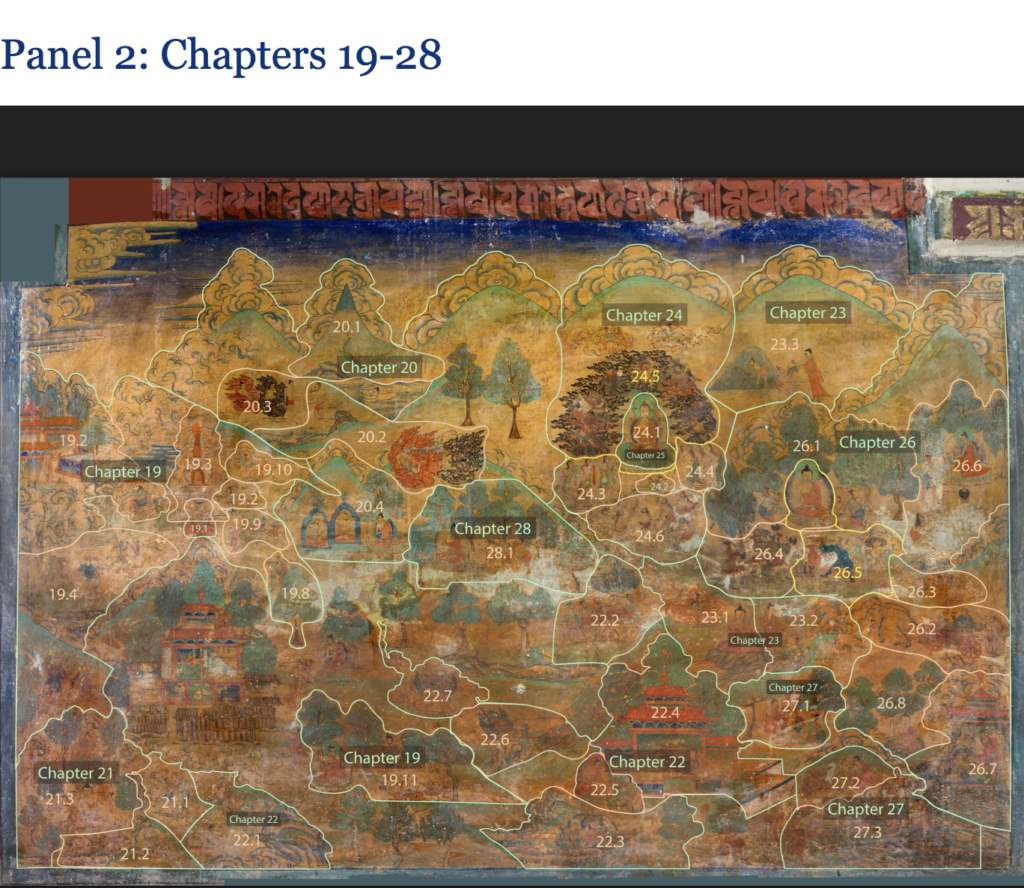
The mural used throughout this project is the Jonang Puntsokling Monastery mural. This is an extensive set of paintings, spanning over 277 feet, located on the second floor of the Puntshokling Monastery’s central building. The images depict the Buddha’s life story in accordance to the Tāranātha, who created a literary work: The Sun of Faith.
- Inferred date of creation is the early 1620s, soon after The Sun of Faith was written
- Named “The Boundless Design” by Tāranātha
- Divided into 15 panels
- Photographed and turned into high resolution images for detailed viewing
- Chosen to support visual analysis, reading and interpretation, and exploration
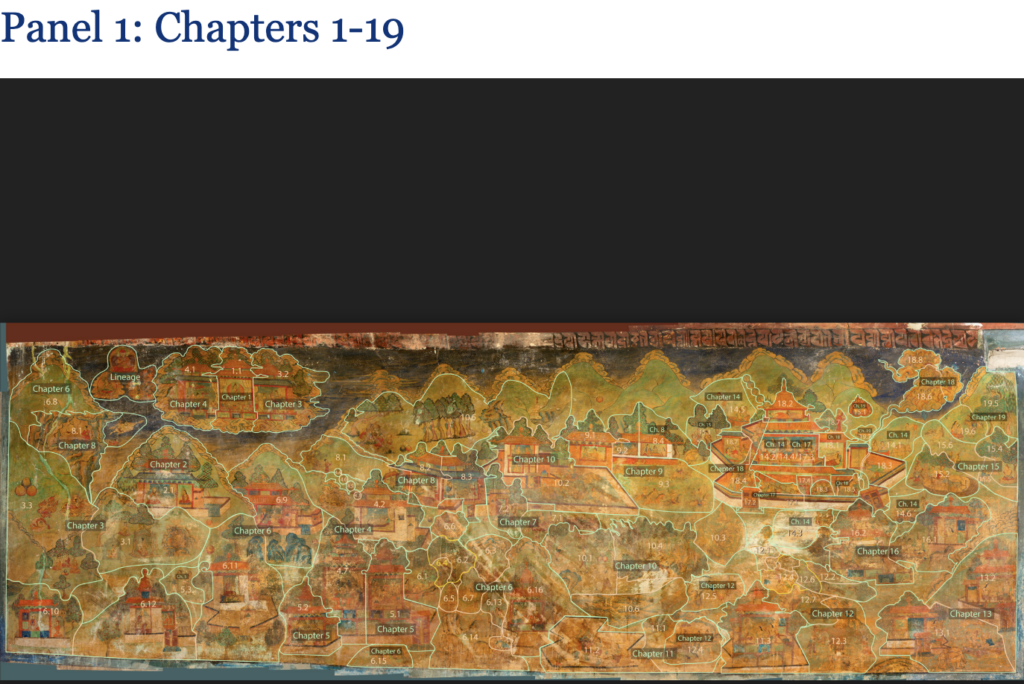
To collect these images, master files were created for all 15 murals
- Stitched together from 100-300 individual photographs from each panel
- Had to edit and design the visual structure to tie in the narrative aspect and identify chapters to simplify mass amounts of data through Mirador
Textual Data: Narrative
The project includes 3 narrative sources: The Sun of Faith, the Painting Manual, and the mural inscriptions.
- The Sun of Faith is a narrative that was written in 1621 by Tāranātha
- Encompassed a complete narrative of Buddha’s life
- The scene by scene Painting Mural was created by Tāranātha as well
- 57 chapters
- Undated
- Mural Inscriptions were physically painted on the mural
These sources were available online, and project creators used Unicode to edit the language and import it into Mirador
- Drafted english translation of The Sun of Faith and the mural inscprtions
- Had to survey Tibetan language sources for accuracy
- Analyzed completed translations and matched to the visual of Buddha’s life through an earlier narrative created by Nanam Tsünpa in the late 15th century titled “The Supreme Treasury

Output
The result is an interactive digital platform where users can view images, read text, and navigate across scenes. The format is web-based with a visual and textual display and a searchable and navigable system. The data is shared within the project and publicly accessible through the website, where users interact with it directly through the interface, with the output being the viewer.
This project organizes and labels data, connects multiple data types, and makes data accessible through an interface for DH’s best practices. However, the complexity of navigation suggests there’s room for clearer documentation and user guidance. Due to the images being undownloadable, this does not meet DH practices either.