Summary
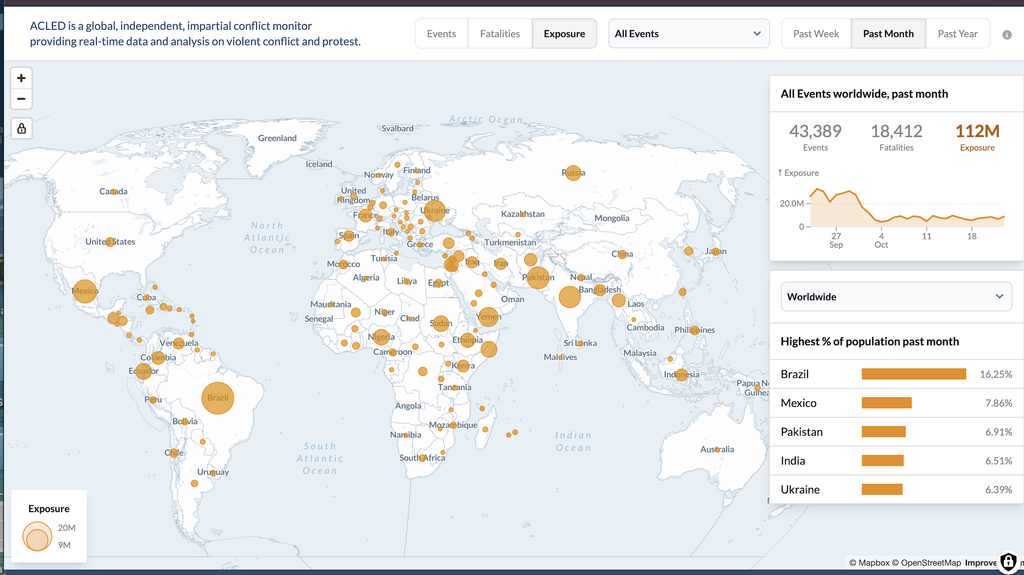
The Armed Conflict Location & Event Data Project (ACLED) ACLED is a global, independent, impartial conflict monitor providing real-time data and analysis on violent conflict and protest. website aims to give the general public and researchers a away to view worldwide violent incidents in once condensed place. Through this website its viewers can recognize patters, view who is responsible for incidents, what the nature of the events is.
Who
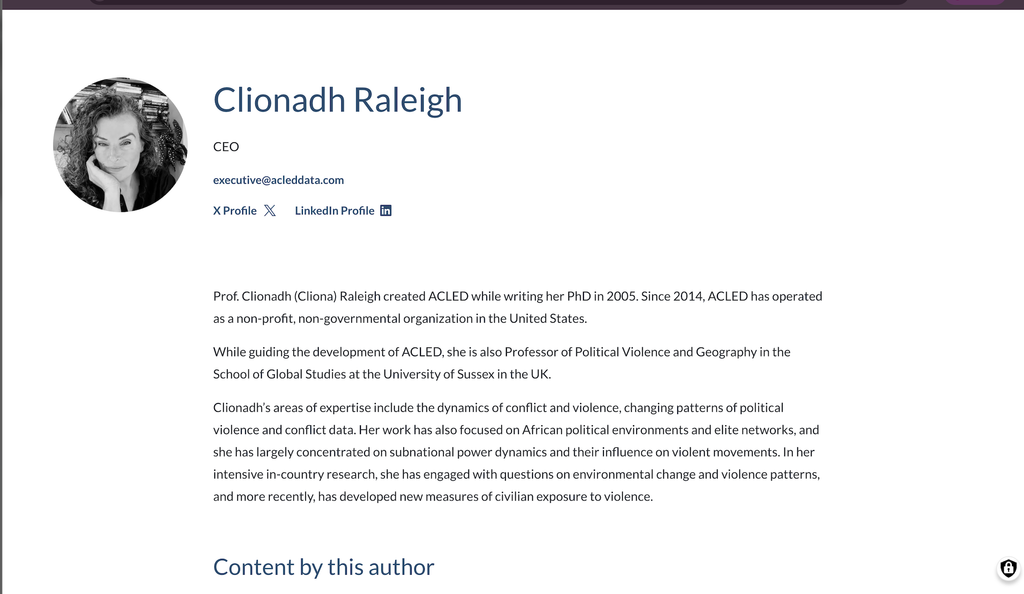
The ACLED website was created by Clionadh Raleigh, a professor of political violence and geography. She created the website in 2005 because existing data models failed to capture how global conflict was actually changing. Although she still leads as CEO ACLED has grown to host a team of staff thats over 200 members. These members are broken up into departments that consist of the Executive team, Executive office, Program Management Office, Global Risk Center, Global Data Collection, Methodology, Data Science, Revenue, External Affairs, Operations & Human Resources, Finance, Board members and the Advisory board.
What
ACLED is a data centric website thats primary objective is collecting data on violent conflicts and protests around the world so that there is a streamlined place for people such as political scientists, researchers, reporters and the general public can have access to this information that might not otherwise be documented or noticed. When using the website you can expect to see graphs, Maps, Global analysis tools, and access to global data info on specific regions ad topics.
When
ACLED was created in 2005 and received independent non profit organization status in 2014.
Where
ACLED is an entirely remote organization, which allows their team of over 200 to live and work in all countries and contexts where they collect data and analyze instability.
Why
This Project is important because through it we’re able to see patterns of violence as well as preserve this info to be studied and analyzed digitally in the present and future. This directly connects to the ideas of DH as preserving historical information digitally is one of DH’s biggest objectives. Those in the DH field aim to preserve the information in its purest form and make it accessible for all.