Digital Project: J. Walter Thompson & the United States Marine Corps

The relationship between J. Walter Thompson and the United States Marine Corps reveals how military identity in the twentieth century was not only shaped on battlefields
The connection between J. Walter Thompson and the Marine Corps began formally in 1941, when the agency was commissioned to conduct surveys of urban and rural youth. These early studies measured attitudes toward enlistment and helped shape recruitment strategy during a moment of global conflict. By 1947, JWT officially acquired the Marine Corps account. In its early years, the Corps did not purchase traditional advertising space. Media placements often appeared as public service announcements, while JWT billed for strategic counsel, artwork, recruiter training, and research.
The document measures how advertising influenced young men’s preferences among military branches. Specifically, it compares those who recall seeing Army advertising with those who do not recall it, analyzing how ad recall correlates with branch preference.
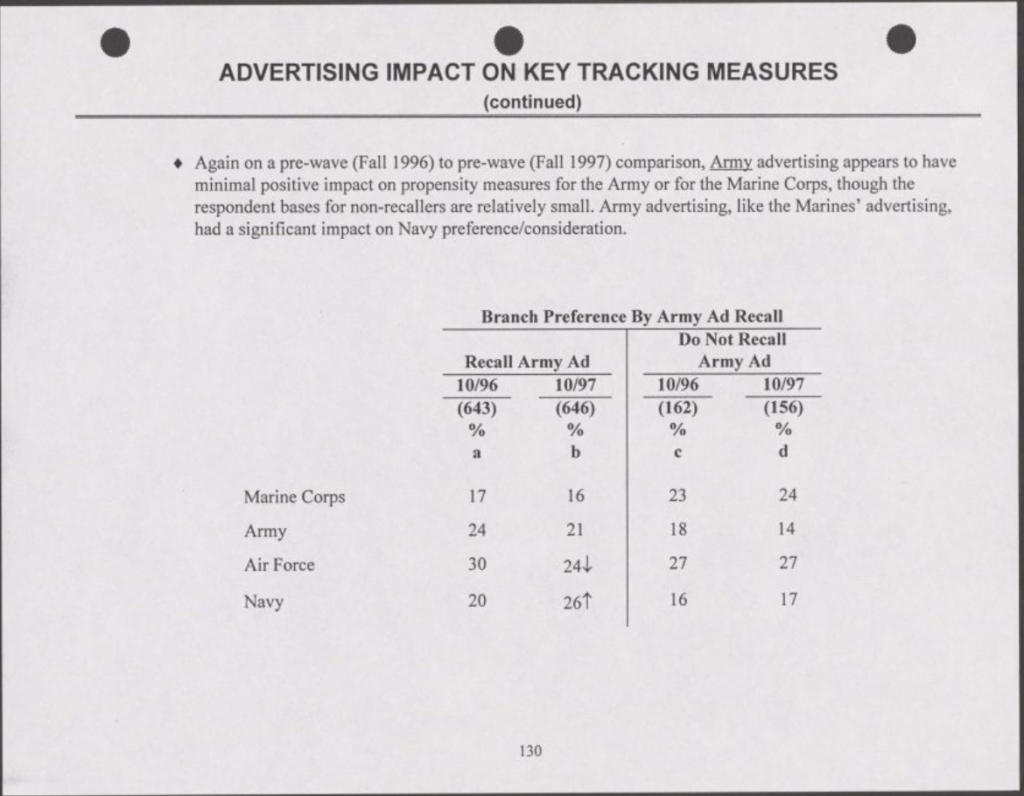
- Marine Corps
- Army
- Air Force
- Navy
The percentages reveal measurable shifts in preference between 1996 and 1997, illustrating how advertising recall was linked to changes in branch consideration.
This page is significant because it shows that recruitment marketing was treated as a data-driven process. Advertising was not simply creative messaging — it was quantitatively tracked, evaluated, and adjusted based on measurable outcomes.
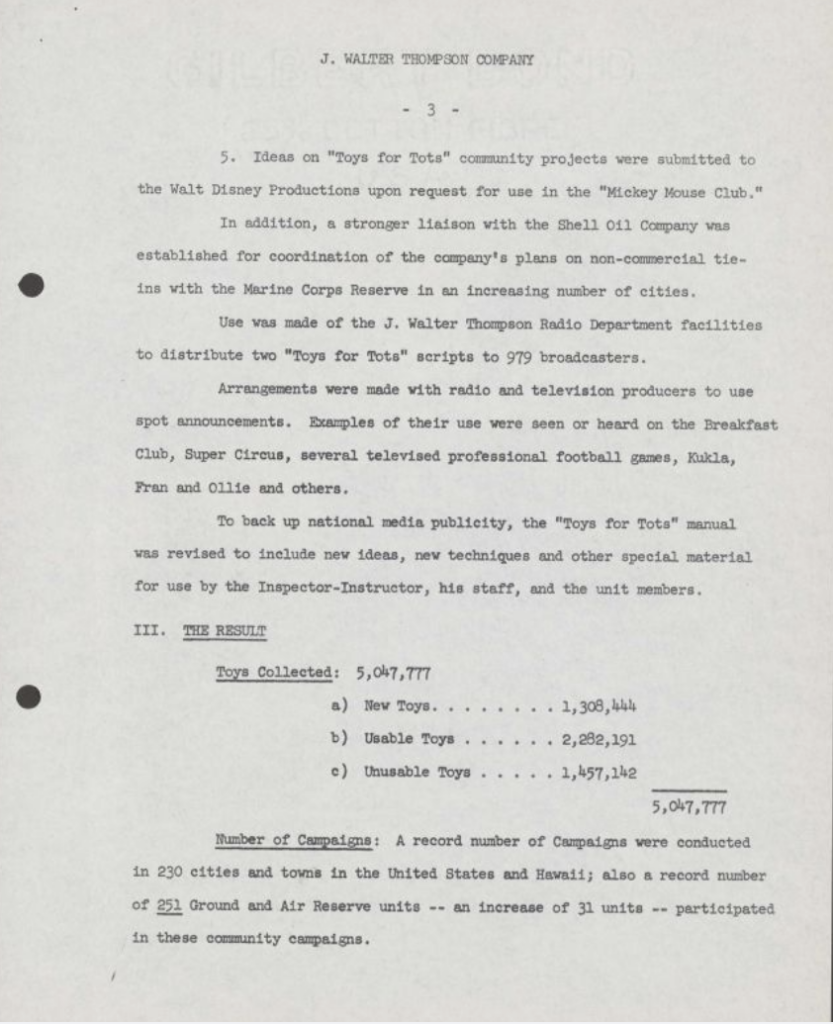
JWT’s responsibilities extended beyond initial recruitment. Campaigns addressed career retention, Reserve service, and broader public image. The Toys for Tots campaign, conducted by the Marine Corps Reserve, illustrates this dual function. While charitable in purpose, it also significantly increased awareness of the Reserve and strengthened positive associations with the Marine Corps brand. Tri-annual account reviews required JWT to justify and renew its partnership with the Corps, presenting strategic proposals for adapting to cultural change. The relationship itself was continuously negotiated.
The goal of this project seeks to demonstrate how advertising shaped the identity of the United States Marine Corps in the second half of the twentieth century. It highlights the intersection of history, marketing, and culture, and shows how digital archives enable new forms of historical analysis.
By studying recruitment campaigns, research reports, and interview transcripts together, this project reveals that the Marine Corps was not only a military institution it was a carefully constructed idea and that idea was built, tested, and refined in the offices of J. Walter Thompson