Fighting Gender Inequality
Jazz history has frequently emphasized male instrumentalists, bandleaders, and composers. Even though women have made significant contributions as instrumentalists, composers, arrangers, vocalists, educators, and bandleaders, their impact is scarcely credited or documented.
Linked Jazz’s researchers recognized that their network contained relatively few women and began investigating how gender-related information could help reveal underrepresented musicians. Their work led to the Women of Jazz initiative and related efforts to improve women’s representation in digital knowledge systems.
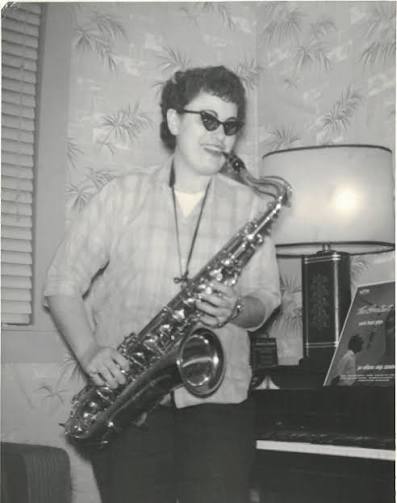
In its September 2016 article, Linked Jazz describes how Latto helped uncover a forgotten concert at Carnegie Hall called JAZZ: female, held on November 29, 1957. Zena Latto shared a fragile flyer from her personal collection, which Carnegie Hall’s archives had not previously documented. In addition, bringing to light the impact of other female musicians such as Mary Lou Williams, Melba Liston, and Vi Redd.
When researchers can trace their professional relationships and connections to other artists, these musicians can be understood not simply as individual exceptions to a male-dominated narrative, but as participants in the wider development of jazz.
Latto also spoke about learning clarinet from Benny Goodman, playing in the New York jazz scene, touring with the International Sweethearts of Rhythm, and experiencing racism faced by the band’s interracial membership. Linked Jazz recorded her oral history and created a Wikipedia page to help make her story accessible.
Why is this a powerful example of cultural impact? A woman’s personal memorabilia and memories helped recover an event missing from an important cultural institution’s records. Linked Jazz helped turn that discovery into preserved, searchable public history.
This is an important shift in historical interpretation.
Instead of asking only, “Which women were successful in jazz?” researchers can ask:
Which musical communities did women help shape?
Who mentored or collaborated with them?
Which influential musicians recognized their work?
How might conventional historical accounts have overlooked their contributions?
How can their biographies and archival records become more visible to future generations?
Uplifting Minorities
Jazz holds an important place in American cultural history and is deeply connected to African American musical traditions, creative innovation, and social life. Linked Jazz can help illuminate this history by emphasizing the relationships through which musicians exchanged ideas and developed their craft. Its network approach encourages people to see cultural production as collective rather than as the work of isolated geniuses.
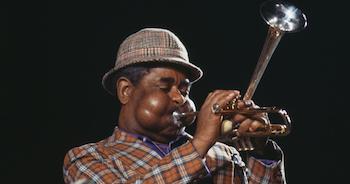
Dizzy Gillespie, an African American jazz trumpeter and composer, collaborated with Charlie Parker, Melba Liston and other jazz musicians, helping shape bebop and modern jazz. His documented connections in Linked Jazz demonstrate how Black musicians influenced one another and shaped American music history. Showing how Black musicians collaborated, influenced each other, and shaped American music despite facing racial discrimination.
There is an important qualification, however. A network of documented relationships is not a complete account of African American cultural experience. It cannot fully capture the effects of segregation, unequal access to recording contracts, discrimination in venues, labor conditions, or the broader social and political circumstances that shaped musicians’ lives unless those issues are explicitly researched and represented.