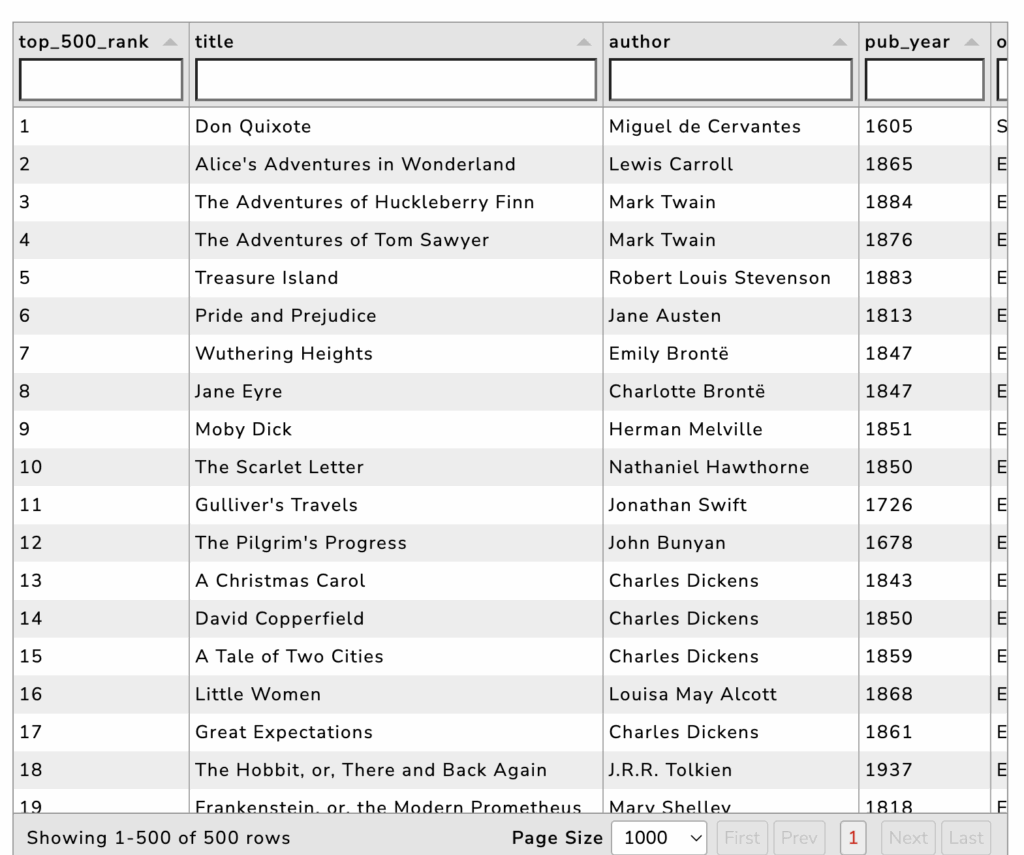
The Top 500 Novels dataset focuses on the most widely held novels in global library collections. It captures both quantitative data, such as the number of library holdings, and qualitative information, including author names, publication details, and nationality.
Most of the data appears as structured text and metadata rather than images or scans, allowing for easy sorting, searching, and reuse. Each entry represents a single novel and includes bibliographic information that links to the broader literary canon. The project is designed for accessibility, allowing both researchers and general users to explore trends in literary representation through downloadable data and contextual essays.
Input Data and Sources
All data originates from OCLC’s WorldCat, the world’s largest library catalog, which collects records from thousands of libraries worldwide.
From this database, the project creators compiled information about the 500 novels most frequently held in global collections.
The dataset draws directly from:
- OCLC WorldCat metadata (titles, authors, publication years, and library holding counts)
- Linked Open Data connected to WorldCat records for additional bibliographic context
- Public domain full texts such as Project Gutenberg, included for 190 novels that are no longer under copyright
🔗 OCLC WorldCat
🔗 Responsible Datasets in Context – Top 500 Novels
Output Data and Formats
The final output is a public, open-access dataset available through the Responsible Datasets in Context website. Users can:
- Download the dataset as a CSV file for analysis
- View contextual essays and visualizations explaining the findings
- Access metadata documentation describing the structure and meaning of each data field
Connection to Digital Humanities Best Practices
The Top 500 Novels dataset exemplifies DH best practices in data transparency, ethical use, and accessibility. Its openly documented sources, structured data model, and reusable formats align with standards for responsible data stewardship. By prioritizing preservation, documentation, and equitable access, the project ensures that its data can be analyzed, reinterpreted, and built upon by future researchers.