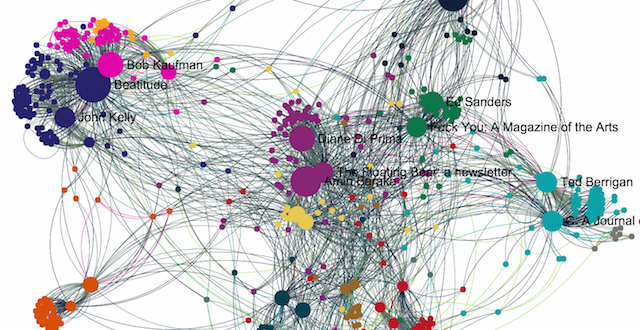
What does the Network Reveal
Shows how poets participated in overlapping literary communities rather than belonging to completely separate poetry movements. The network also makes it easier to identify connections between contributors and publications, including journals such as Yugen and The Floating Bear.
Students can use the project to learn about mid-century American poetry, explore literary movements, and discover relationships between writers and publications. Literary enthusiasts and independent researchers can browse historical journals, explore contributor networks, and access downloadable data. These features may also encourage people outside academia to engage with literary history through interactive digital tools. Overall, this project supports scholars more than students, providing great historical evidence of poetry for further analysis.