“Documenting the Now” has an array of tools that it has made to help catalog Twitter data but there are three main ones used. Firstly, “DocNow” is what helps search through Twitter trends to find specific groups of tweets to archive. The result of this is a string of “Tweet IDs” that are saved to a computer via a plain text file. “Hydrator” could then be used to turn the IDs back into tweets and their conjoining data. Finally, these data sets could be shared with other users of the project through “The Catalog”. This is a database that allows for the sharing of archived tweets for others to see.
Step 2: Using “Hydrator”
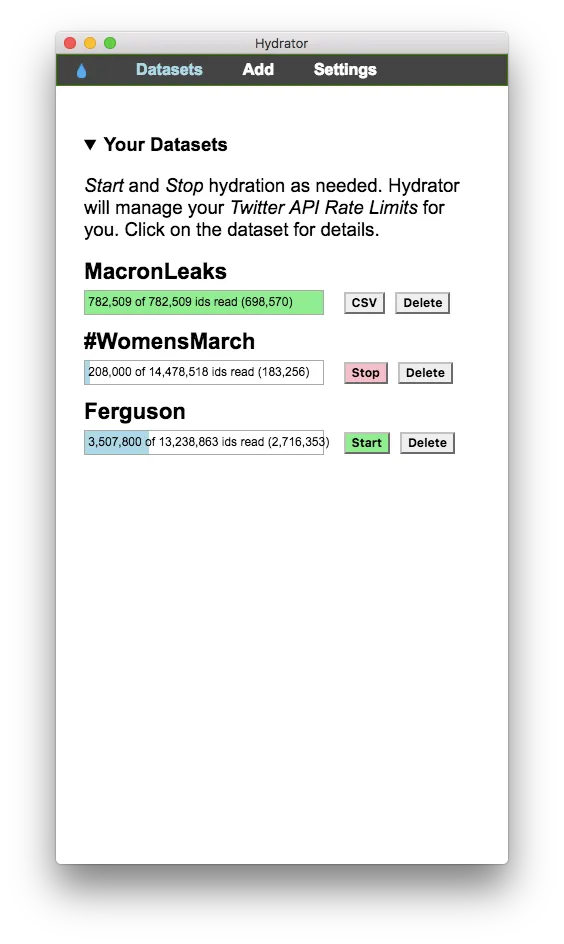
After using the “DocNow” tool users still needed to complete one more step in order to view actual Tweet data. By putting the plain text file of Tweet IDs into “Hydrator” users would have been able to see their data set within a spreadsheet that included both the original Tweet content and it’s meta data.
The purpose of going through this process rather than just receiving all of the data from “DocNow” is that the Hydrator’s purpose is to sort through all the Tweet IDs to see if there has been any deleted Tweets or change in data in order to account for that in the final data set.
“Documenting the Now” put a strong emphasis on participant consent. Unlike downloading data straight from Twitter and getting a rigid and never-changing data set, “Hydrator” would know based on the Tweet ID if someone had deleted their content so that informed consent remains an ongoing process.