Overview of Tool/Method
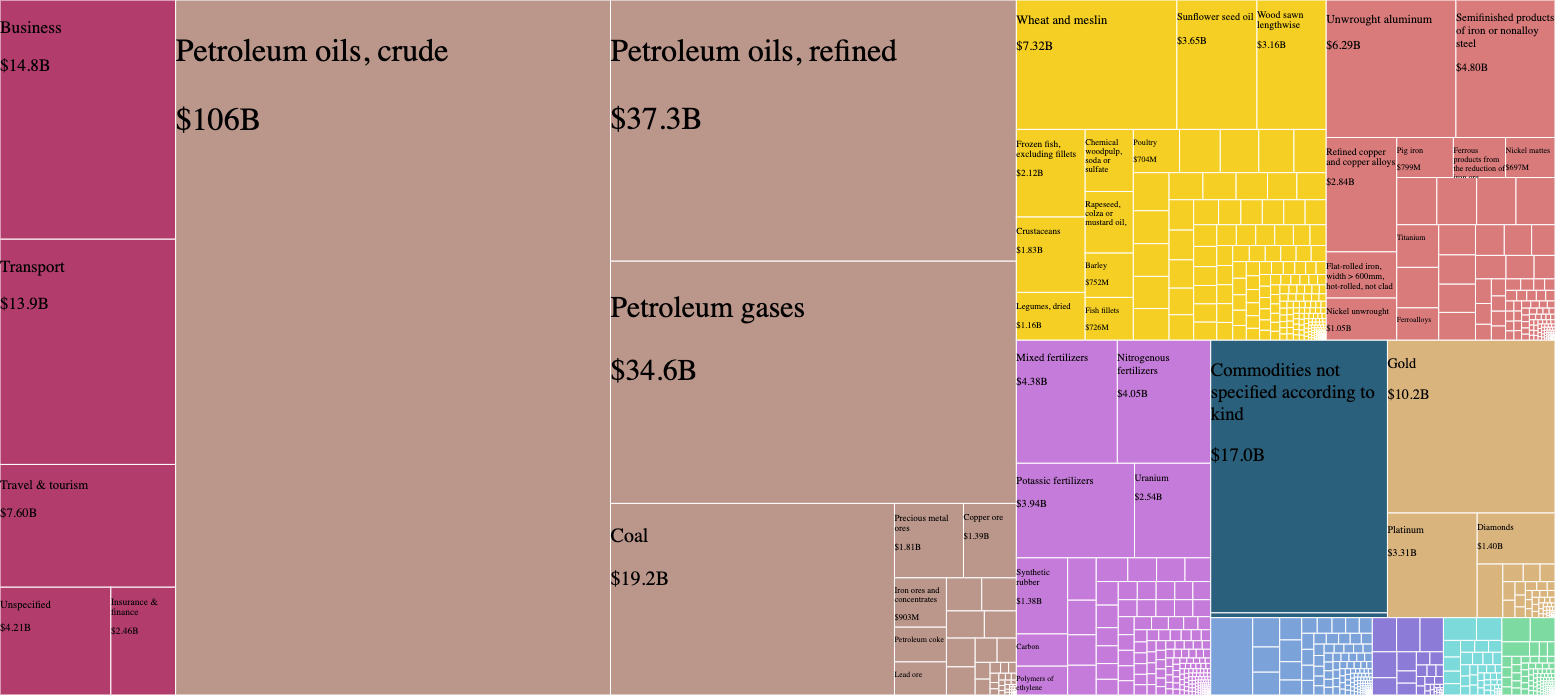
Trade Composition is a hierarchical treemap visualization used in the Atlas of Economic Complexity to display a country's export portfolio. Each colored rectangle represents a product category (e.g., petroleum, chemicals, machinery), with size proportional to export value. This tool organizes global trade data from UN COMTRADE, showing what countries produce and how diversified their economies are.
It's Relation to Digital Humanities
Trade Composition's hierarchical visualization approach directly applies to Digital Humanities for mapping cultural production. DH scholars could use similar treemaps to visualize distributions of digitized manuscripts by region and/or literary genres by time period.
Overall Tool/Method
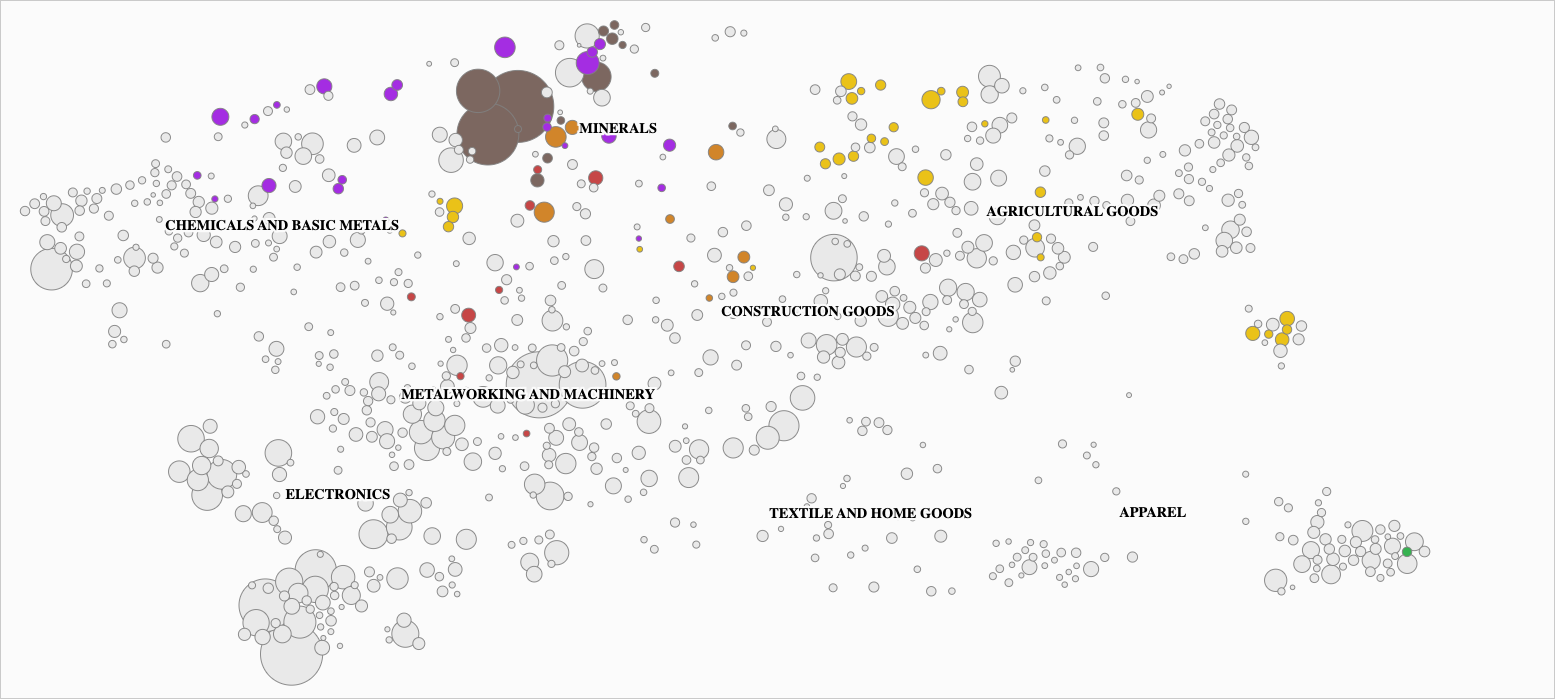
Product Space is a network visualization tool from the Atlas of Economic Complexity. It maps relationships between products based on countries' export patterns. Products appear as nodes connected when countries frequently export them together. The network and connection reveals "product clusters" showing which exports require similar productive capabilities. This helps economists understand paths to economic diversification.
Its Relation to Digital Humanities
The tools netowrk analysis method perfectly aligns with DH's computational approaches to cultural complexity. Researchers in DH already use similar network graphs to map relationships between authors and texts, manuscripts and themes, or historical figures and events. Applying Product Space logic, DH could create "Cultural Product Spaces" which can show how different forms of cultural production cluster together. This advances and improves DH's experimentation value by adapting economic network methods for cultural heritage analysis.
Overview of Tool/Method
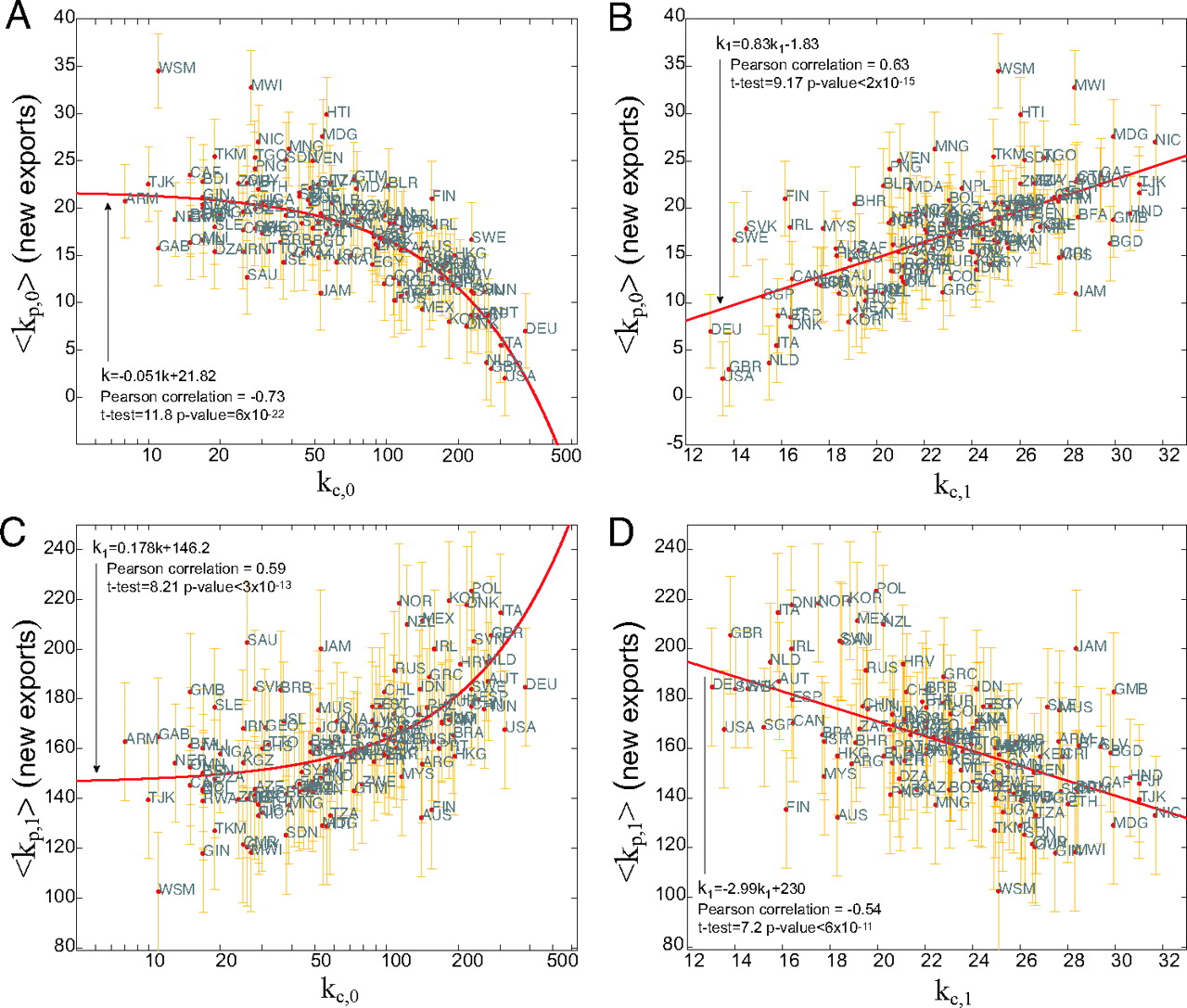
The Method of Reflections is the core computational algorithm in "the building blocks of economic complexity" (PNAS, 2009) used for calculation. It works through interactive calculations on networks (countries & products) repeatedly refining measures of country diversification and commonness. Figure 3 in the paper (referenced above) demonstrates how iterations over time reveal hidden economic capabiliies.
Its Relation to Digital Humanities
The tool offers DH a rigorous computational framework for understanding and establishing cultural complexity. DH scholars working with large digital collections could apply this iterative algorithm to split networks like institution artifact databases. By doing so, it can reveal hidden patterns in cultural production. Just as the method identifies which countries have rare productive capabilities, it could do the same in relation to culture. The method supports the goals of DH like preservation and analysis. It also encompasses core DH values while doing so like transparency, experimentation, and openness.