by: Anna Dzwoniarek, Aera Isabelle Papaganas, Daniela Ruano Orantes, and Yi Zhang
As our Overview detailed, Paris Past & Present is an interactive website that displays historical architecture from Medieval Paris on a digital platform. This page will assess the methodology of Paris Past & Present in order to review its adherence to values for research in the Digital Humanities.
This website is unique because it is also a space for students in a class called Digital Gothic at the UCLA to get course information, view previous work, and update for credit. Digital Gothic was offered at UCLA in 2015 and 2017. This information can be recognized through various time-stamps. There is also link to an Instagram that indicates this was a summer class as well. However, the Instagram widget is broken or unable to find posts.
For this project, teams of 3 students were assigned a structure to be researched and replicated digitally. The sub-menu “Syllabus,” which is hidden within the “Medieval Gothic” tab, explains students’ course expectations and course objectives. It is not relevant to viewers who are not enrolled in Digital Gothic.
Methodology
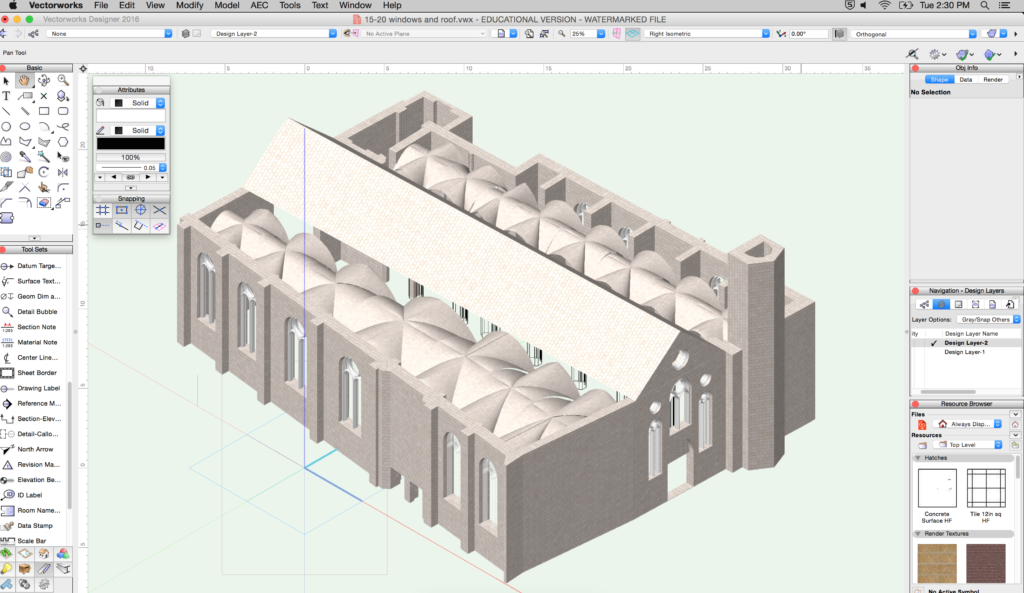
Paris Past & Present is a 3D modeling project for historical recreation that uses Vectorworks to model architecture, Sketchfab to share results in the browser, Youtube to share data, and Google Earth to share geographical information. The project’s website is also made through WordPress.

There are also historical photographs of building remains and drawn-out plans of Paris from the past. Some buildings this project researched have archeological remains and the project lists them.
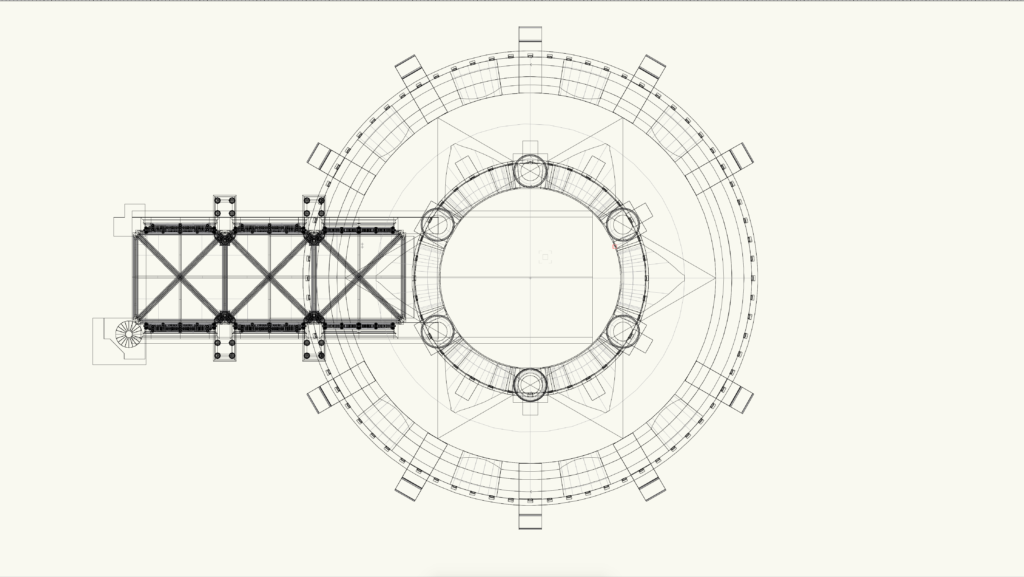
Rather than being obvious about their methodology, they inconspicuously lists it in the “tutorials” section of the website. In this section, there is a “Vectorworks Quick Reference Guide” which explains how to do everything from creating a floor plan to creating pointed arches for digital buildings in Vectorworks. This guide alludes to the fact that Vectorworks is the design software used, although it is never outright stated or explained why this software was chosen. However, the project’s use of Youtube, Sketchfab, and Google Earth are shown elsewhere on the site in even more discrete ways than Vectorworks.
Because this is a student built project, the quality is inconsistent from page to page. Paris Past & Present is obviously not finished, which is why it does not appear they are aiming to share their methodology with the public.
Transparency:
The Digital Humanities believes that we should be as transparent as possible. Yet, how Paris Past & Present shares their methodology is not transparent . Unfortunately, those interested in their methodology will have a tough time gathering this information. It is reported obliquely and to obtain this information requires reading between the lines. This website does an average job with this: while it’s methodology adheres to best practices, it is not clearly reported. If someone was truly interested they could dig around the site and conduct outside research to determine what makes the methodology effective. In this way, the information is present, but not a focal point of the website.
Paris Past& Present does demonstrates transparency by giving credit to those who contributed information and time to the project. Credit is given to both individuals and to the sources where information was obtained. Credit is given at the end of every video, at the bottom of every page, and within the “Our Team” sub-menu of the “About Us” tab.
Openness:
According to Lisa Spiro, digital scholarship requires researchers to have access to data, tools, and free platforms. The value of openness that she describes in her article, refers to open-source software and also to educational resources like course evaluations. Ethan Watrall states that “open courseware benefits the global community of learners by making knowledge widely available (and is thus “the right thing to do”), the university by making visible its curriculum and offering educational resources for current students, and faculty members by documenting their educational innovations and giving them access to the pedagogical contributions of their colleague.” Paris Past & Present very much exemplifies this openness because it is the open courseware that Watrall speaks of, benefiting individual learners, universities, students, and faculty. It also exemplifies openness because it requires no log-in or fee to enter the website. Moreover, this project used open-source software so anyone can replicate this research on their own.
